
How Much Can a Landlord Increase Rent? You can only raise rent within limits set by state and local law. Caps often tie to CPI or a fixed percentage, with stricter controls under rent control/stabilization. Fixed-term leases rarely allow midterm hikes; month-to-month needs proper notice. Many areas limit increases to once per 12 months. Written notice must state the new rent, effective date, and legal basis. Utility/fee changes may count as rent. Verify exemptions, registration, and notice compliance to see what’s permissible next.
Key Takeaways
- Rent increases are capped by local laws; rent-controlled or stabilized units often tie raises to CPI or annual board-set percentages.
- Fixed-term leases usually bar mid-lease increases unless the contract explicitly permits them.
- Month-to-month tenancies allow increases with proper written notice and within statutory caps and frequency limits.
- Many jurisdictions limit increases to once every 12 months and require specific notice periods and content.
- Exemptions may apply to new construction or small owner-occupied buildings; verify unit status and landlord registration.
Table of Contents
Understanding Rent Control and Rent Stabilization
Two distinct legal regimes rent control and rent stabilization govern how much a landlord can raise rent. Under rent control, statutes or municipal codes cap increases through fixed formulas, often tied to CPI or explicit percentage limits.
You must check the controlling ordinance, effective dates, and covered unit criteria, because exemptions (new construction, small owner-occupied buildings) are common. Violations trigger remedies that protect tenant rights, including rollback, refunds, and penalties.
Rent stabilization permits periodic increases but only within regulator-set thresholds published annually. You’re entitled to notice periods, documented calculations, and prohibition of surcharges beyond authorized amounts. Agencies require landlords to register units, preserve services, and honor habitability standards; noncompliance can bar increases. Always verify coverage, lawful increase percentages, and appeal procedures with the administering housing authority.

How Lease Type Affects Rent Increases
Although state and local law set outer limits, your lease structure largely dictates when and how rent can rise. In fixed-term lease agreements, statutes typically bar midterm increases unless the contract expressly authorizes them (for example, tax pass-throughs or utility escalators).
Month-to-month tenancies allow changes after the term resets, subject to caps under rent control or anti–price gouging laws. In commercial-style residential forms, a “triple net” or indexed clause may tie rent to CPI or operating costs; enforceability hinges on clear drafting and jurisdictional rules against unconscionable terms.
If your unit is exempt from rent stabilization, market-rate provisions prevail, but still operate within statutory ceilings. When the rental market shifts, renewal negotiations can reflect higher comparables, yet increases must remain consistent with applicable statutes and the written lease.
Notice Requirements and Timing Rules
Before you raise rent, you must meet statutory notice periods and delivery methods that vary by jurisdiction and tenancy type. You must serve written notice that states the new rent, the effective date, and the basis for the change, and you must deliver it using the mode authorized by local legal regulations (for example, personal service, certified mail, or electronic delivery if permitted).
Calculate the notice window from the date of service, not the date you draft the notice. Exclude prohibited dates, such as mid‑term changes during a fixed lease, unless a statute or the lease expressly allows them. For month‑to‑month tenancies, many statutes require fixed minimum notice periods measured in days. If your rent increase triggers a threshold, longer notice may apply. Keep proof of timely, proper service.
Limits on Frequency of Increases
Even when a statute doesn’t cap the amount, it may cap how often you can raise rent. Many jurisdictions impose frequency limits commonly one increase per 12 months regardless of the percentage. Some statutes tie the clock to the effective date of the last increase; others use the date of notice. Read the specific code section, because miscounting the interval can void an increase or expose you to penalties.
Watch for increase exceptions. Laws often exclude initial tenancies, subsidized units, or owner‑occupied duplexes. Disaster or capital-improvement surcharges may be allowed but still can’t breach the baseline frequency limits without explicit authorization. If local rent stabilization applies, its ordinance controls and may be stricter than state law. Document dates, notices, and effective periods to prove compliance.
Mid-Lease Changes vs. Renewal Increases
Frequency limits address how often you can raise rent, but timing within the lease term matters just as much. Most jurisdictions prohibit mid lease adjustments unless your lease expressly allows them and a statute authorizes a pass‑through (for example, a tax surcharge) or a rent escalation clause tied to a clear index. Otherwise, the contract fixes rent until expiration. Review your lease language and the governing code for any carve‑outs, notice periods, and caps.
At renewal, you’re free to propose a new rate, but you must follow statutory notice and any local cap that applies to renewal negotiations. Provide written notice within the required lead time (commonly 30–90 days), cite authority if a cap applies, and document delivery. If the tenant refuses, the tenancy ends on term expiration.

What Counts as a Legal Rent Increase
Although practices vary by jurisdiction, a rent increase is “legal” only when it: complies with any rent cap or stabilization ordinance; occurs at a time permitted by the lease and statute (no mid‑term hikes absent an authorized pass‑through or indexed clause); follows required notice procedures (method, content, and lead time); respects anti‑retaliation and anti‑discrimination laws; and, where applicable, adheres to registration or disclosure rules.
You must also check legal thresholds that limit frequency and magnitude, including CPI‑tied formulas, vacancy rules, and statewide preemption. Your rental agreements matter: the lease controls timing, escalation mechanics, and whether an index or surcharge is authorized. Serve notice in the statutorily approved manner, state the new amount and effective date, and keep proof. Avoid increases tied to protected activity. If required, file rent registration before enforcement.
Utility, Fee, and Service Changes That Impact Rent
Beyond base rent increases, many jurisdictions regulate changes to utilities, fees, and services that effectively raise what a tenant pays. You must evaluate whether proposed utility adjustments, add-on fees, or service downgrades function as rent increases under governing statutes or ordinances. Many laws require fee transparency, advance written notice, and a lawful basis tied to actual costs, not profit.
Evaluate utility shifts, new fees, and service cuts hidden rent increases requiring notice, transparency, and cost-based justification.
- Utility adjustments: If a landlord shifts from included utilities to RUBS or submetering, statutes often mandate disclosure, calculation methodology, and caps on administrative add-ons.
- Fees: Application, amenity, pet, parking, or “ratio billing” charges may be treated as rent; improper or undisclosed fees risk penalties and refund obligations.
3) Services: Eliminating promised amenities or reducing maintenance without corresponding rent reductions can constitute unlawful constructive rent increases.
State and Local Variations You Should Know
Because rent rules hinge on jurisdiction, you must pinpoint the controlling statute or ordinance before raising rent. Start with State regulations: many states preempt cities, while others allow Local ordinances to impose stricter Rent increase caps and notice periods. Identify whether your unit is exempt (e.g., new construction, small landlord, owner-occupied).
Confirm required lead time, frequency limits, and any inflation index or fixed percentage formula. Verify Tenant protections such as anti-retaliation, just-cause triggers tied to caps, and rollover rules after fixed terms.
| Scope | Typical Controls | Key Checks |
| State regulations | Preemption, caps, notice | Statute citation, exemptions |
| Local ordinances | Stricter caps, registries | City code section, filings |
| Unit status | Exemptions, coverage | Year built, unit type |
| Procedure | Notice, timing | Delivery method, dates |
How to Negotiate or Challenge a Rent Hike
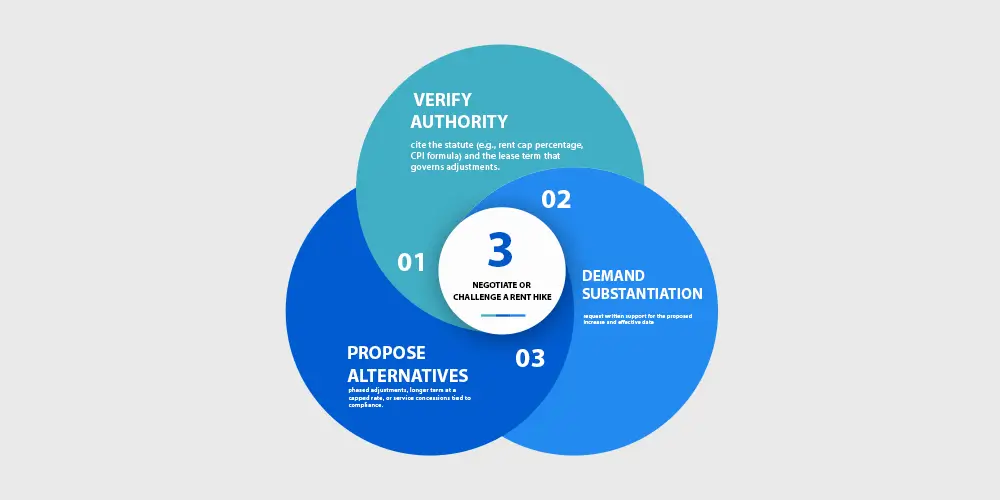
Even before you debate the amount, anchor your response in the controlling law and lease. Identify caps, notice periods, renewal timing, and any rent stabilization rules. In rent negotiation, cite the precise statute or ordinance and the lease clause it triggers. Ask the landlord to justify the increase with documentation market comps, operating costs, or capital improvements then counter with verified data and lawful limits. Keep your tone fact-based; you’re building a record to challenge increase if needed.
Lead with law and lease: cite caps, demand proof, counter with data, document everything.
Steps to Take If You Receive an Illegal Increase
If a rent hike violates a statute, ordinance, or your lease, act quickly and document everything. Save the notice, envelope, and any texts or emails. Compare the increase to rent-control caps, notice periods, and habitability or retaliation provisions. Verify whether you’re in a protected unit and whether the landlord registered the unit if required.
Send a dated, written objection asserting tenant rights and identifying the specific code sections the increase violates. Pay the lawful rent on time; don’t withhold unless a statute authorizes it. File a complaint with the local rent board or housing agency and request an administrative hearing. If needed, seek an injunction or declaratory relief in small claims or civil court. Keep a timeline, receipts, and witness statements to challenge illegal rent.
Frequently Asked Questions
How Do Rent Increases Affect Section 8 or Housing Voucher Tenants?
You face rent changes only if allowed under Section 8 policies. The housing authority must approve increases, verify reasonableness, and adjust rental assistance. If the payment standard’s exceeded, you may pay more or receive denial until compliance.
Can Landlords Raise Rent After Major Property Tax Reassessments?
Yes, but only within rent control caps and notice statutes. You must follow local ordinances, document property tax implications, and show reassessment impact. Provide proper notice periods, respect lease terms, and avoid retaliation or discrimination. Verify jurisdiction-specific limits.
Do Amenities Like Parking Changes Justify Rent Increases?
Yes—if your lease or local statutes allow adjustments for tenant amenities, parking changes can justify rent increases. You must receive lawful notice; added parking fees require clear authorization. Check rent control ordinances, lease clauses, and applicable state notice and caps.
How Do Roommates or Subletting Impact Allowable Rent Hikes?
Roommates or subletting affect allowable rent hikes only if statutes or rent-control ordinances permit adjustments for additional occupants. You must review lease roommate agreements and building subletting policies; absent lawful provisions, increases can’t exceed regulated caps or notice requirements.
Are Rent Increases Different for Corporate or Institutional Landlords?
Yes. You’ll face the same statutory caps, but corporate policies and institutional practices can standardize notice periods, annual cycles, and fee structures. Statutes control maximum increases; entity type rarely changes limits, though compliance rigor and documentation often differ.
Conclusion
You should verify the governing statute first: rent control/stabilization ordinances, state caps, and notice statutes set the ceiling, timing, and process. Check your lease term—mid‑term hikes are generally void unless the lease authorizes them. Confirm written notice met statutory lead times. Scrutinize utility pass‑throughs and fees against code. If the increase exceeds a cap or violates notice rules, send a written objection, request the legal basis, and file with the local housing agency or court to invalidate or reduce the hike.