
Can Landlords Refuse Pets? Yes, landlords can refuse pets if the lease says so, but state and local laws set limits. Many places allow breed, size, and number caps, and charge pet deposits, fees, or pet rent—subject to caps and disclosure rules. Service animals and ESAs aren’t “pets” and are generally exempt from bans and fees, though landlords may verify need within fair housing limits. Some jurisdictions curb blanket bans or require due process for violations. We explain approvals, fees, and negotiation next.
Key Takeaways
- Generally, landlords can refuse pets, unless restricted by state/local laws or specific housing policies.
- Assistance animals (service animals and ESAs) aren’t “pets” and can’t be refused or charged pet fees under fair housing laws.
- Some jurisdictions limit pet bans in certain housing types or impose breed/size rule preemptions; verify local and state regulations.
- If pets are allowed, landlords may set reasonable conditions: approval processes, deposits/fees, pet rent, and behavior/vaccination requirements.
- Lease terms control: read pet clauses for definitions, fees, approval, and remedies; violations can trigger penalties or eviction with due process.
Table of Contents
Understanding Pet Policies in Rental Agreements
Although pet clauses can look routine, we should read them like any other binding term: line by line. We evaluate definitions (what counts as a pet), species and breed limits, weight caps, and total number allowed. We scrutinize approval procedures, required disclosures, and whether consent is revocable. Fees matter: deposit versus nonrefundable fee versus monthly pet rent, plus how damage is assessed and documented. We map obligations vaccinations, licensing, insurance, noise control, and waste management because they shape landlord tenant relationships.
We also compare clauses to market realities. Rental market trends show growing demand for pet-friendly units, yet terms vary widely. We reconcile pet ownership rights asserted in marketing with the actual remedies and penalties in the lease, including cure periods, notice requirements, and grounds for eviction.
What Local and State Laws Say About Pets
We’ve examined what leases say about pets; now we need to measure those terms against the law. State regulations and local ordinances set outer boundaries that lease clauses can’t exceed. Many states permit pet restrictions in market rentals but cap pet deposits, regulate fees, or require itemized damage accounting. Cities may impose breed bans, licensing, microchipping, spay/neuter rules, and nuisance standards that affect what pets we can keep legally.
We should check whether our jurisdiction bars blanket “no pets” rules in certain housing types, requires notice before changing pet policies, or limits nonrefundable charges. Tenant rights often include due process before eviction for pet-related violations, reasonable time to cure nuisances, and freedom from deceptive advertising about pet acceptance. Always confirm statewide preemption that can override stricter local ordinances.

Pets vs. Service Animals vs. Emotional Support Animals
Clarity starts with definitions: pets are animals we choose to keep, while service animals and emotional support animals (ESAs) are disability-related. Under federal service animal definitions, a service animal is a dog (or in limited cases a miniature horse) individually trained to perform tasks for a person with a disability. ESAs don’t require task training; they provide therapeutic support confirmed by a licensed professional. These emotional support distinctions matter because housing providers must evaluate assistance animals differently from pets.
We should maintain tenant rights awareness: assistance animals are generally not subject to pet bans or pet fees, though reasonable rules and verification may apply. Landlords can ask limited, disability-related questions, but they can’t demand medical details or training certificates beyond what the law permits.
Common Reasons Landlords Restrict Pets
Even when a building allows animals by law in certain contexts, many landlords still restrict pets to manage risk and costs. We see recurring concerns: pet damage to floors, doors, and landscaping; noise complaints; and liability from bites or property harm. Breed and size limits often stem from insurers’ underwriting rules and premium hikes, so insurance implications directly shape policy.
We also weigh tenant responsibility. Clear rules can’t prevent negligence, unauthorized animals, or inadequate training, which increase wear, odors, and nuisance reports. Multiunit settings amplify risks shared hallways, elevators, and common areas magnify conflicts and maintenance needs. Allergies and health sensitivities among residents add another operational constraint. Ultimately, we restrict pets when the foreseeable costs, safety exposures, and compliance burdens outweigh predictable benefits to the community.
Fees, Deposits, and Pet Rent: What’s Allowed
While pet-friendly policies can widen our applicant pool, the law limits how we structure charges. We must distinguish refundable pet deposits from nonrefundable fees and recurring pet rent. Many states cap deposits, prohibit double-charging for the same risk, or bar nonrefundable fees. Pet rent must be reasonable and disclosed before lease signing. Our pet application process should document the animal, vaccination records, and behavior history, and it must exclude assistance animals from any pet charges under fair housing rules.
We can require renters’ insurance and consider pet insurance options, but only if state law permits and terms are uniformly applied. Transparency drives tenant rights awareness: we should itemize amounts, explain refund criteria, and use evidence-based damage assessments to justify deductions at move-out.
Breed, Size, and Number Limits: Are They Legal?
Because limits on breed, size, and number touch fair housing and local safety rules, we need to separate what’s legally permissible from what’s risky. Generally, private landlords may set neutral size restrictions policies and reasonable caps on the number of animals, if applied consistently and disclosed.
But blanket bans tied to breed can collide with fair housing when they function as proxies for disability-related animals or protected classes. Local breed specific legislation may mandate or bar certain breeds; we must align with municipal codes while respecting federal fair housing carve‑outs for assistance animals. Pet ownership rights are not absolute, yet arbitrary rules invite scrutiny.
- Distinguish assistance animals from pets
- Verify local ordinances and breed specific legislation
- Apply rules consistently across tenants
- Document safety, insurance, and property justifications
How to Negotiate Pet-Friendly Terms With a Landlord
If we approach a landlord with facts, flexibility, and a clear plan, we can often secure pet‑friendly terms that protect both sides. We lead with documentation: vet records, vaccination proof, spay/neuter status, and training certificates. We quantify risk by providing a resume with prior landlord references and outlining pet owner responsibilities in writing. When negotiating pet deposits, we separate refundable deposits for damage from nonrefundable fees for turnover, propose reasonable caps, and offer higher rent only if required by market norms.
We suggest creating pet agreements that define permitted animals, noise expectations, waste management, supervision, and remedies for breaches. We also propose trial periods and periodic inspections, giving the landlord measurable safeguards while preserving our ability to house our animals responsibly.
Tips for Keeping Your Pet Lease-Compliant and Welcome
Even after we’ve secured pet-friendly terms, we keep our lease compliance tight by treating the agreement like a checklist. We document pet ownership responsibilities, verify vaccination schedules, and confirm any breed, size, or noise limits.
We also map out landlord communication strategies report incidents promptly, log corrective actions, and request approvals in writing for grooming, walkers, or sitters. Regularly using pet friendly amenities helps channel energy and reduce damage risk.
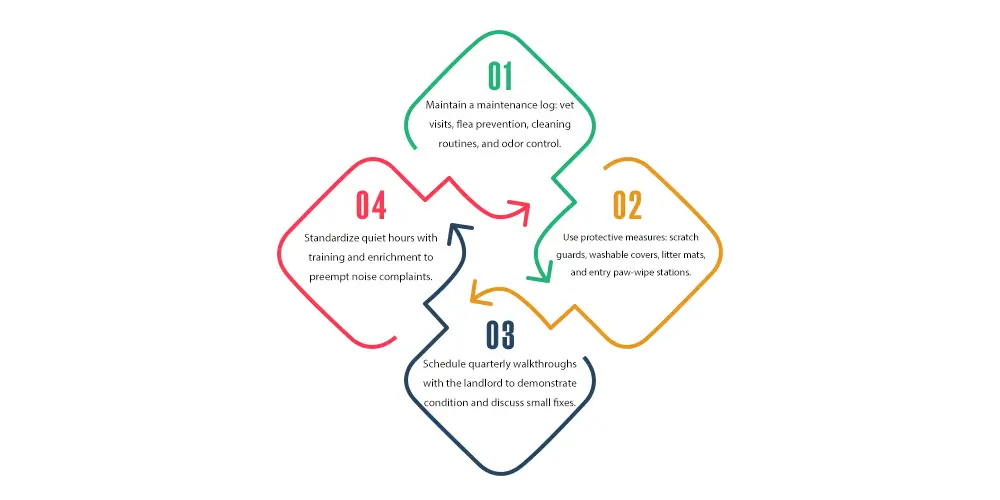
Proactive proof beats promises.
Frequently Asked Questions
Can Landlords Require Pet DNA Testing for Waste Compliance?
Yes sometimes. We can require pet DNA testing if leases authorize it and local law permits. We’ll weigh pet waste management benefits against tenant privacy concerns and legal compliance issues, disclose procedures, secure data, offer alternatives, and document consent to reduce disputes.
How Do Pet Bans Apply to Visiting or Temporary Pets?
They usually extend to visitors. We enforce temporary pet policies and visiting pet restrictions equally, unless leases carve exceptions. We assess landlord liability issues, require notice, and may limit duration, size, or number. Document permissions and specify penalties for violations.
Are Exotic Pets Treated Differently Than Common Household Pets?
Yes. We typically see stricter exotic pet regulations than for cats or dogs. We’ll evaluate tenant rights and lease agreements, considering species restrictions, permits, insurance, and safety risks, then advise you on compliance, disclosures, and potential landlord approvals.
Can Landlords Restrict Pet-Related Businesses Run From the Rental?
Yes. We can restrict pet-related businesses if lease agreements prohibit commercial use or local pet business regulations require licensing or zoning. We’ll balance tenant rights with safety, insurance, noise, and traffic. Always review terms and seek written permissions.
What Happens to Pet Agreements During Landlord Ownership Changes?
Pet agreements usually carry over; we honor existing terms until expiration. During pet policy changes, we assess lease agreement amendments, observe tenant notification requirements, and implement changes only prospectively. We document approvals, grandfather existing pets, and clarify fees, deposits, and insurance obligations.
Conclusion
We’ve seen that landlords can restrict pets, but laws, lease terms, and protected animal categories shape the limits. We should verify state and local rules, distinguish pets from service and support animals, and scrutinize fees, deposits, and pet rent. Breed, size, and number caps often stand, yet negotiations and solid documentation can secure exceptions. If we maintain our pet’s behavior, meet insurance and cleanliness standards, and memorialize agreements in writing, we’ll protect our rights and keep our pets welcome.