
Here’s a Landlord Safety Compliance London 2025 Checklist: we keep EICRs every five years (share within 28 days), annual Gas Safety (CP12), auditable Fire Risk Assessments, and tested smoke/CO alarms. We guarantee EPC meets MEES, complete Right to Rent checks, and follow HMO/selective licensing rules. We log inspections, defects, remedials, and contractor competence, with 90/60/30-day renewal reminders. Expect proactive borough inspections, data-matching, and higher civil penalties up to £30,000. We outline enforcement risks and how to stay compliant next.
Key Takeaways
- Ensure valid EICR (every 5 years) and Gas Safety Record (annual), provide to tenants within 28 days, and keep records for council requests.
- Complete and update Fire Risk Assessments, verify fire doors, alarms, emergency lighting, and maintain auditable FRA documentation annually or after material changes.
- Install and test smoke and CO alarms, manage legionella risks, maintain EPC meeting MEES, and complete Right to Rent checks before tenancy start.
- Maintain central property files with licenses, safety certificates, inspection logs, remedials, and contractor competency evidence; use 90/60/30-day renewal reminders.
- Prepare for 2025 enforcement: proactive inspections, higher civil penalties, HHSRS hazard campaigns, and data-matching to identify unlicensed HMOs.
Table of Contents
Legal Framework and 2025 Enforcement Highlights
Although housing law can feel fragmented, London landlords operate under a clear statutory spine: the Housing Act 2004 (HHSRS), Housing and Planning Act 2016 (civil penalties and banning orders), Deregulation Act 2015 (s.21 preconditions), Homes (Fitness for Human Habitation) Act 2018, Electrical Safety Standards in the PRS Regulations 2020, Smoke and Carbon Monoxide Alarm Regulations 2015/2022, Gas Safety (Installation and Use) Regulations 1998, Fire Safety Order 2005 (for common parts), and local licensing under the Housing Act 2004.
In 2025, enforcement tightens: more proactive borough inspections, higher civil penalties for repeat breaches, and expanded data-matching to identify unlicensed HMOs. We should audit landlord responsibilities quarterly, evidence repairs, and keep licence conditions current. Expect targeted HHSRS hazard campaigns and tenancy protection spot-checks. Invest in compliance training, document safety checks, and respond to notices within deadlines. Meeting legal obligations protects tenants and safeguards our position.
Electrical Safety: EICR Requirements and Renewal Timelines
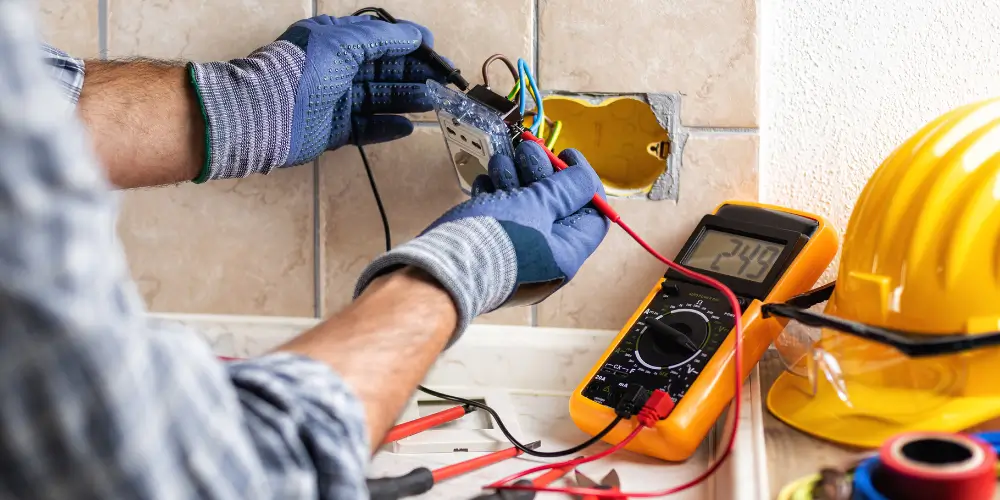
Building on the legal framework above, we must meet the Electrical Safety Standards in the Private Rented Sector (England) Regulations 2020. Every fixed installation needs an electrical inspection (EICR) by a qualified person at least every five years, or sooner if the report states an earlier re-test. We must remedy C1/C2 codes urgently and investigate FI items. Provide tenant notifications with the EICR within 28 days, supply it to prospective tenants before occupation, and to the local authority within seven days when requested. Keep records for renewal timelines and evidence during enforcement.
- Protect lives faults can ignite without warning; a clean EICR brings real peace of mind.
- Protect tenancies clear tenant notifications build trust and cooperation.
- Protect finances compliance with safety regulations avoids penalties and disruption.
Gas Safety Certificates and Ongoing Appliance Maintenance
While electrical checks set the tone, gas safety is non‑negotiable under the Gas Safety (Installation and Use) Regulations 1998: we must arrange an annual Gas Safety Record (CP12) by a Gas Safe registered engineer for every gas appliance and flue, fix any “Immediately Dangerous” or “At Risk” findings before continued use, and keep records for at least two years.
We also schedule appliance servicing aligned with manufacturer guidance and document remedial works. Proactive tenant communication is essential: explain how to report smells, alarms, or issues and provide emergency contact details. After gas inspections, we issue the CP12 to tenants within 28 days and before move‑in.
| Requirement | Action |
| Annual CP12 | Book Gas Safe engineer |
| Fault categories | Isolate and repair promptly |
| Appliance servicing | Follow maker intervals |
| Records | Retain 2+ years |
| Tenant communication | Share results, guidance |
Fire Risk Assessments for Houses, Flats, and HMOs
Because fire law in England is tiered by property type, we start with a structured Fire Risk Assessment (FRA) that reflects your building’s use and layout. We align with the Fire Safety Order 2005, the Fire Safety Act 2021, and LACORS guidance for houses, flats, and HMOs. We apply evidence-based risk assessment methodologies to identify ignition sources, fuel loads, and vulnerable routes, then prioritise controls and maintenance duties.
Structured FRA aligned with UK fire law, identifying risks and prioritising controls for your specific building.
We confirm compartmentation, fire doors, escape route integrity, signage, emergency lighting, and documented tenant evacuation plans tailored to occupancy. For HMOs, we scrutinise common parts, management arrangements, and record-keeping. We review fire safety protocols annually or on material change, and we keep an auditable FRA.
- Protect lives your tenants’ safety depends on decisive action.
- Reduce liability prove compliance, avoid penalties.
- Preserve property limit damage, recover faster.
Smoke and Carbon Monoxide Alarm Standards and Testing
How do we meet and prove we meet the legal minimum for smoke and carbon monoxide (CO) alarms in London rentals? We follow the Smoke and Carbon Monoxide Alarm (England) Regulations 2015 (as amended 2022) and the Building Regulations. Alarm installation requirements: at least one smoke alarm on every storey used as living accommodation and a CO alarm in any room with a fixed combustion appliance (excluding gas cookers). HMOs require Grade/Density per the Housing Act and LACORS guidance.
Testing frequency guidelines: test on the first day of each new tenancy; repair or replace faulty alarms “as soon as reasonably practicable.” We document dates, locations, models, and tester signatures.
Tenant notification procedures: provide written confirmation of tests, user instructions, and reporting routes; keep records for inspections and enforcement by the local authority.
Legionella Risk Controls and Water System Management
Having set clear standards for alarms, we now turn to Legionella control, which sits squarely within a landlord’s duty under the Health and Safety at Work etc. We implement risk assessment protocols aligned with HSE’s ACoP L8 and HSG274, covering system schematics, temperature profiling, and asset condition.
Our legionella prevention strategies prioritise maintaining hot water at ≥60°C at cylinders, ≥50°C at outlets (within one minute), and cold water at ≤20°C. We flush rarely used outlets weekly, remove dead legs, descale taps and showerheads quarterly, and document all water quality monitoring.
- 1. Protect vulnerable tenants prevent avoidable illness with disciplined controls.
- 2. Sleep easier records prove diligence when regulators or insurers ask.
- 3. Act today small lapses in flushing or temperatures can have serious consequences.
We review annually and after system changes.
Energy Performance Certificates and Minimum Efficiency Standards
While safety dominates compliance, we must also meet energy performance duties: every let property needs a valid Energy Performance Certificate (EPC), and it must meet the Minimum Energy Efficiency Standards (MEES). We commission an accredited assessor, display the EPC’s energy efficiency ratings from A–G, and guarantee tenants receive it at marketing or viewings.
Our landlord obligations include confirming the property meets the current MEES threshold before granting a new tenancy or continuing an existing one, documenting exemptions on the PRS Exemptions Register only where lawful, and renewing EPCs every 10 years or sooner after major upgrades.
We improve performance via cost‑effective measures LED lighting, heating controls, insulation and retain evidence of works. Clear tenant awareness helps reduce consumption and maintain ratings through proper use and reporting.

Right to Rent Checks and Secure Recordkeeping
Because civil penalties and criminal liability apply, we run Right to Rent checks on every adult occupier before tenancy start and keep auditable records. We inspect original documents or use the Home Office online service, take date-stamped copies, and record follow-up check dates for time-limited permissions. We align tenant verification with rental agreements so the tenancy cannot commence without evidence. Our secure retention meets data protection requirements and supports compliance audits.
Right to Rent checks before tenancy, date-stamped evidence, follow-up reminders, and secure retention ensure audit-ready compliance.
- Relief: We prevent fines and protect your reputation by proving due diligence when inspectors call.
- Confidence: Clear tenant verification reduces disputes and accelerates rental agreements with clean, defensible files.
- Control: Structured reminders for repeat checks keep you ahead of expiries and enforcement.
We train staff, document processes, and periodically review our evidence to guarantee legal continuity.
Building Safety, Fire Doors, and Common Parts Compliance
From day one, we treat building safety as a statutory duty: we identify relevant building safety legislation (Building Safety Act 2022, Fire Safety Order 2005 as amended, Fire Safety (England) Regulations 2022), map responsibilities for the “accountable person”/responsible person, and maintain a current fire risk assessment covering flats, fire doors, and common parts.
We implement building maintenance standards, document routine common area inspections, and verify that fire doors self-close, are suitably fire-resisting, and aren’t wedged. We post and maintain wayfinding, evacuation instructions, and fire strategy signage where applicable. We log defects, track remedial works, and evidence contractor competence.
| Priority action | Evidence to retain |
| Quarterly common parts checks | Dated inspection records |
| Fire door checks (6–12 months) | Door survey logs/photos |
| Emergency lighting tests | Monthly/annual certificates |
| Alarm/monitoring servicing | Competent person reports |
We review controls after any incident or refurbishment.
HMO Licensing, Selective Licensing, and Local Authority Rules
Building safety duties link directly to licensing obligations in London, where operating without the correct licence is a criminal offence. We must confirm whether our property needs an HMO licence under the HMO regulations overview: number of occupiers, households, and amenities trigger mandatory or additional schemes.
Where councils run borough-wide schemes, we assess selective licensing impacts on single-family lets and smaller HMOs. Conditions typically mandate fire precautions, amenity standards, and management practices; breaches invite local authority enforcement via civil penalties, rent repayment orders, or prosecution.
- Fear: A missed licence can cost us unlimited fines and seized rent.
- Urgency: Council spot checks and neighbour complaints escalate fast.
- Relief: Proper licensing aligns safety controls, cuts risk, and protects income.
We always check borough guidance and map property use against definitions.
Documentation, Evidence Logs, and Renewal Calendars
Although licensing sets the framework, we prove compliance with robust records: we maintain a central file for each property with current licences, gas safety (CP12) certificates, EICR, PAT logs, fire risk assessment, alarm/emergency lighting test logs, Legionella assessment, EPC, smoke/CO alarm installation/test records, asbestos register (where applicable), floor plans, occupancy agreements, right-to-rent checks, and deposit protection proof.
We structure documentation best practices around version control, date-stamped uploads, and audit trails. For evidence log management, we record inspections, defects, remedials, contractor competence, and sign-off, with photo and invoice links. We operate renewal calendar strategies: automated reminders at 90/60/30 days for CP12, EICR, PAT, fire alarms, extinguishers, emergency lighting, FRAs, EPCs, and licences. We share read-only access with stakeholders and archive superseded documents.
Penalties, Enforcement Actions, and Remediation Strategies
Even when we manage risks well, London enforcement can escalate quickly if we miss statutory duties. Local authorities use risk-based enforcement procedures under the Housing Act 2004, HHSRS, and related regulations. Penalty escalation follows non-compliance: improvement notices, civil penalties up to £30,000, prohibition orders, rent repayment orders, and where aggravated prosecution. We should act before formal action lands.
Act before formal action: risk-based enforcement escalates quickly with stiff penalties and prosecutions.
Our remediation tactics must be documented, time-bound, and independently verified:
- Fear: fines, rent repayment, and licensing bans can cripple cashflow and reputation.
- Urgency: once served, notice deadlines are short; every day of delay compounds risk.
- Relief: prompt fixes, contractor certificates, and evidence logs often reduce penalties.
Practical steps: triage hazards, commission certified inspections, fix to British Standards, upload proof to the council portal, and request reconsideration or appeal when appropriate.
Frequently Asked Questions
How Do I Educate Tenants About Safety Responsibilities Without Breaching Privacy?
We provide safety education methods via opt-in emails and notices, use tenant communication strategies like consent-based meetings, and apply privacy respect techniques: anonymized examples, data minimization, and clear lawful bases. We document delivery, reference regulations, and invite questions without collecting sensitive details.
What Insurance Policies Complement Safety Compliance Requirements?
We recommend landlord, property, and public liability insurance types. Pair them with rent guarantee and legal expenses. Verify coverage limits match building values, tenants, and risks. Prioritize liability protection, employer’s liability if staff, and terrorism add-ons where regulations require.
How Can I Budget and Schedule Works to Minimise Tenant Disruption?
We phase works during vacancies, prioritize high-risk items, and anchor timelines to statutory deadlines. We use tenant communication strategies, maintenance scheduling techniques, and budget allocation methods, with contingency reserves, quiet-hour rules, and grouped trades to reduce visits, noise, and repeat access.
Which Digital Tools Help Track Multi-Property Compliance Tasks?
We recommend Property management software, Compliance tracking apps, and Digital checklist tools to track multi-property compliance. We’d use automated reminders, audit trails, asset registers, and dashboard KPIs to evidence gas, electrical, fire, and legionella deadlines, reducing missed statutory obligations.
How Do I Prepare for an Unannounced Council Inspection Visit?
We maintain inspection readiness by keeping records current, conducting routine checks, and training staff. We follow council guidelines review, stage an emergency preparedness plan, verify certificates, label hazards, confirm access arrangements, and log corrective actions with timestamps, evidence, and responsible parties.
Conclusion
Staying compliant in London isn’t optional, it’s essential risk management. We’ve covered 2025’s key duties: up-to-date EICRs, annual gas safety checks, proportionate fire risk assessments, compliant alarms, robust building safety in common parts, and the right licences. Let’s document everything, certificates, test logs, remedial works, and diarise renewals to avoid fixed penalties, rent repayment orders, and enforcement. When in doubt, check the latest Regulations and local guidance, act promptly on defects, and evidence every step. Compliance protects tenants and us.