
We explain your duties under the Regulatory Reform (Fire Safety) Order 2005 and Fire Safety Act 2021, aligning emergency lighting with BS 5266/BS EN 1838/BS EN 50172. You must appoint competent persons, schedule monthly and annual tests, and fix faults within set SLAs. Maintain logbooks with asset IDs, locations, test dates, results, rectifications, certificates, and version control for audits. We flag risks from legacy fittings, refurb changes, and access issues, then show how to stay inspection‑ready next.
Key Takeaways
- The Responsible Person must ensure BS 5266-compliant emergency lighting is installed, maintained, and tested under the Fire Safety Order and Fire Safety Act.
- Keep a logbook with asset register, test dates, results, faults, rectifications, and certificates; ensure time-stamped, traceable records for audits.
- Perform monthly functional tests and annual full-duration tests; document failures and set rectification targets with re-test dates.
- Use competent, certified contractors; define scope, testing frequencies, and certification requirements in contracts; verify training on relevant British Standards.
- Update plans and logbooks after refurbishments; reassess escape routes, high-level access, battery autonomy, and legacy fittings to maintain compliance.
Table of Contents
Why Emergency Lighting Matters in London Premises
Because power loss and smoke rapidly degrade visibility, emergency lighting is a life‑safety control that keeps escape routes, fire-fighting points, and critical plant rooms illuminated to the lux levels required by BS 5266 and the Regulatory Reform (Fire Safety) Order 2005. In London premises, dense occupancy, vertical egress, and complex plant increase risk.
We prioritise emergency preparedness by specifying lighting technology with proven photometric performance, self-test functionality, and battery autonomy to maintain minimum durations. We design for uniformity, glare control, and signage legibility so occupants can make accurate decisions. We build safety awareness into operations by locating luminaires to avoid shadowing from architectural features and tenant fit-outs. Regular functional testing verifies charging circuits, inverter changeover, and lumen maintenance across all zones.
Legal Framework: UK Fire Safety Law and British Standards
We link performance on the floor to the law above it. In London, emergency lighting sits within the Regulatory Reform (Fire Safety) Order 2005 and the Fire Safety Act 2021. These instruments impose legal responsibilities to provide, maintain, and test systems that support safe evacuation.
We align our regimes to BS 5266 series and BS EN 1838 safety standards for illuminance, signage visibility, duration, and placement. Testing intervals and records must evidence suitability and sufficiency, informed by a current fire risk assessment.
Common compliance challenges include legacy fittings lacking rated autonomy, undocumented modifications, unclear zoning, and gaps between design intent and as-built performance. We mitigate risk by specifying photometric compliance, battery life verification, realistic test scheduling, and auditable logbooks that withstand authority scrutiny and insurer review.
Defining the “Responsible Person” and Their Duties
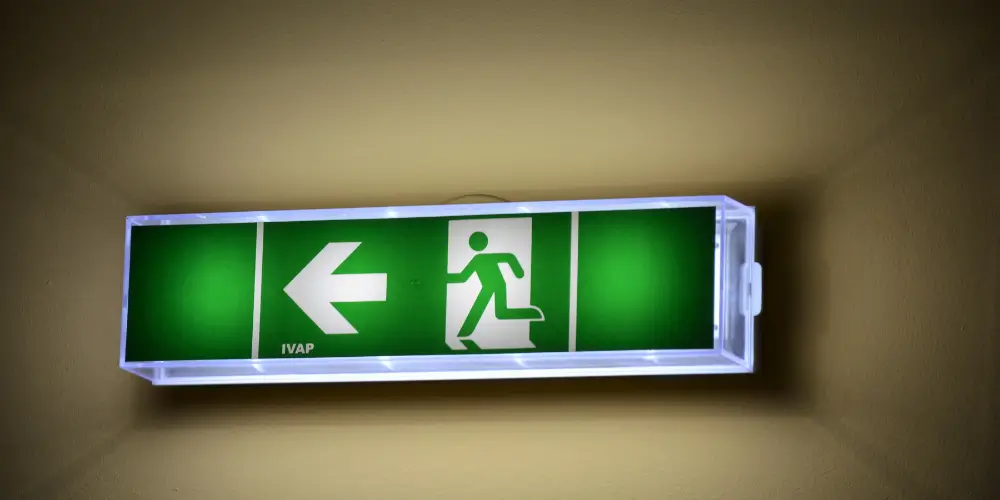
Although roles can be shared across parties, the “Responsible Person” (RP) under the Regulatory Reform (Fire Safety) Order 2005 and as clarified by the Fire Safety Act 2021 anchors legal accountability for emergency lighting. As the responsible person, we must identify fire risks, guarantee suitable emergency escape lighting is installed, and maintain it through a documented testing regime. Our compliance responsibilities include appointing competent persons, setting safety protocols, scheduling functional and duration tests, recording defects, and initiating timely corrective actions.
We also verify system coverage for all escape routes, high-risk areas, and changes of level, keep access to luminaires and test points safe, and guarantee power supplies and signage interface correctly. We retain logbooks, service certificates, and risk-assessment evidence, make them available to enforcing authorities, and review them after material changes or incidents.
BS 5266 and BS EN 50172: What They Require
Even before we test fittings, BS 5266-1 and BS EN 50172 set the benchmark for design, installation, and maintenance of emergency escape lighting across UK premises. Together, they define risk-based design, minimum illuminance on escape routes, signage visibility, system availability, and battery autonomy. We apply BS 5266 requirements to determine locations, photometric performance, mounting heights, and duration (typically 3 hours for sleeping risk or public buildings).
EN 50172 standards prescribe the testing regime and record-keeping. We conduct monthly functional checks, annual full-duration tests, prompt defect rectification, and maintain a compliant logbook tracking dates, outcomes, and corrective actions. These emergency lighting guidelines also require clear responsibilities, access to manuals and drawings, and documented commissioning. Nonconformity elevates life-safety risk and can trigger enforcement under fire safety legislation.
Types of Emergency Lighting Systems and Components
Standards set the performance bar; system choice and component specification determine whether installations meet it in practice. We select system types to control egress risk: maintained luminaires for continuous illumination, non-maintained units that activate on mains failure, and combined fittings where escape and general lighting coexist. Central battery systems offer simplified maintenance but introduce single-point-of-failure risk; self-contained luminaires decentralise resilience. Emergency power sources include integral NiMH/LiFePO4 batteries, central banks, or generators/UPS for extended autonomy.
LED technology advancements drive higher efficacy, cooler operation, and longer lifecycles, reducing load on backup capacity. We specify escape route, open-area, high-risk task, and exit sign luminaires with verified photometrics. Lighting design considerations include minimum illuminance, uniformity, glare control, spacing tables, IP/IK ratings, self-test capability, fault indication, and fire-stopping of cabling.
Testing Frequencies: Daily, Monthly, Six-Monthly, and Annual
Because emergency lighting protects life, we align test frequencies with risk and regulatory intent: brief daily or weekly visual checks to confirm indicators and mains supply, monthly functional tests to prove automatic changeover and lamp operation, six‑monthly tests where specified to validate longer autonomy segments, and a full annual duration test to the rated standby (typically 1–3 hours) under simulated mains failure. We schedule these testing procedures to mirror occupancy patterns and system criticality, ensuring emergency protocols remain reliable during power loss.
Daily or weekly checks are operational assurance; monthly tests confirm switching integrity; six‑monthly intervals address degradation trends; annual tests verify capacity against compliance standards. We document results, faults, and rectification timelines in the logbook, maintaining traceability for audits and demonstrating ongoing conformity.
How to Conduct Functional and Duration Tests
While planning tests around occupancy and risk, we execute functional and duration checks in a controlled, documented sequence that mirrors BS EN 50172/BS 5266 intent. We isolate supplies via test switches, verify automatic operation, and record lumen performance, legends, and fault states.
Our functional testing methods confirm each luminaire changes to emergency mode and provides immediate illumination without excessive dip. Our duration testing procedures verify rated autonomy (typically 1–3 hours) under battery load, with recharge times noted. We document emergency light evaluation outcomes, rectify defects, and tag units out of service if safety margins aren’t met.
Controlled, standards-aligned emergency lighting tests verify mode change, autonomy, illumination levels, recharge, and fault logging.
- Simulate mains failure and observe uniform light levels on escape routes.
- Time autonomy to full discharge; note progressive dimming behavior.
- Confirm charger indications and post-test recharge initiation.
- Photograph locations, asset labels, and defects for logbook evidence.
Creating a Compliant Testing Schedule for Your Building
Although every site has unique risks, we build a testing schedule that aligns with BS EN 50172/BS 5266, your fire strategy, and occupancy patterns to evidence compliance and maintain life safety. We define asset groups (escape routes, high-risk task areas, external exits) and map them to responsible persons and test cadences. Through testing frequency optimization, we set monthly functional tests and annual full-duration tests, staggering circuits to maintain egress coverage.
We embed compliance checklist creation into the schedule: device ID, location, test type, pass/fail, rectification target, re-test date, and logbook references. Using scheduling software options, we automate reminders, assign actions, and lock audit trails. We coordinate isolations, out-of-hours windows, and contractor access, then review performance data quarterly to adjust intervals and resource allocations.
Common Compliance Pitfalls and How to Avoid Them
Despite clear standards, we still see recurring failures that expose duty holders to enforcement and life‑safety risk. We tackle common misconceptions with compliance training, rigorous supervision, and disciplined documentation practices. Focus on risk controls that align with British Standards and the Fire Safety Order to prevent gaps that compromise egress.
- Missed duration tests: We verify full rated discharge, not just “lights on,” to confirm battery integrity and charger function under load.
- Inaccessible fittings: We plan safe access for high-level luminaires, ensuring competent persons and permits control work at height.
- Altered layouts: After refurbishments, we reassess escape routes and spacing to maintain photometric coverage and signage continuity.
- Poor fault escalation: We set repair SLAs, isolate defective units, and retest post-rectification to restore system performance and demonstrate due diligence.
Logbooks: What to Record and How to Keep Them Audit-Ready
Strong controls only stand up in an audit if our records prove them. We must document asset registers (locations, identifiers, types), test schedules, test results (pass/fail, duration, lux levels where applicable), faults, remedial actions, parts replaced, dates, and responsible persons’ signatures. Time-stamping and traceability are non‑negotiable. Include references to standards applied, impairment periods, and re-test confirmations.
Choose logbook formats that align with risk and scale: bound paper with numbered pages, or secure digital systems with role-based access, immutable audit trails, and backups. Our recording methods should capture evidence (photos, certificates, calibration records) and link to each fitting. For audit preparation, maintain version control, exception logs, and change histories. Review entries monthly, reconcile test plans versus completions, and escalate overdue items. Archive per retention policy.
Working With Competent Contractors and Certification
When we appoint contractors for emergency lighting testing in London, we verify competence, scope, and certification against statutory and best‑practice benchmarks to control liability and life‑safety risk. We only engage competent contractors with documented training on BS 5266 and BS 7671 interfaces, evidence of calibrated test instruments, and insurance aligned to our risk profile. We define contractor responsibilities contractually: method statements, isolation protocols, defect grading, and traceable record delivery. We scrutinise certification processes to guarantee each test certificate is complete, unambiguous, and cross‑references our asset register and logbook.
- Photographic evidence of luminaire ID plates and test points.
- Time‑stamped discharge results with voltage curves.
- Floor plans marked with pass/fail symbology and escape‑route impact.
- Corrective‑action register with priorities, parts, and target dates.
Enforcement, Penalties, and Preparing for Inspections
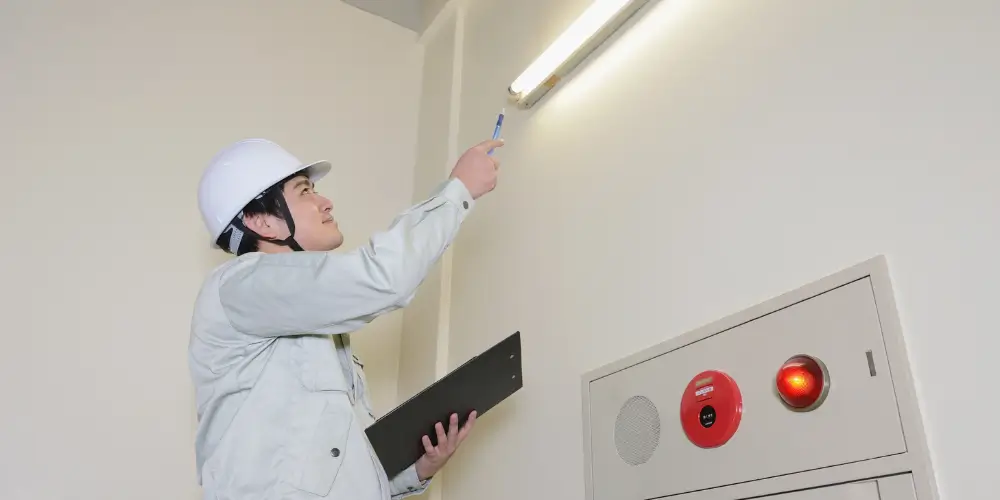
Although enforcement varies by authority, we treat emergency lighting compliance as a statutory duty with criminal and civil exposure under the Regulatory Reform (Fire Safety) Order 2005 and related London Fire Brigade (LFB) enforcement policies. We align our inspection readiness with LFB guidance, British Standards, and our documented maintenance regime. Enforcement agencies assess risk, evidence, and management control. Non‑compliance triggers penalty structures ranging from alteration notices to prosecution, fines, and custodial outcomes for egregious breaches.
| Focus Area | What We Do | Evidence Kept |
| Risk assessment | Verify escape route coverage | FRA, plans |
| Testing regime | Monthly/annual function and duration tests | Logs, certificates |
| Defect control | Categorize, rectify, re-test | Work orders, photos |
| Competence | Vet contractors, training records | Competence proofs |
| Governance | Board oversight, reviews | Policies, audits |
We maintain auditable trails, promptly remediate faults, and pre‑emptively engage inspectors.
Frequently Asked Questions
How Do Heritage Buildings in London Handle Emergency Lighting Aesthetics?
We balance heritage aesthetics with lighting regulations by specifying concealed fittings, sympathetic color temperatures, and discreet signage. We coordinate with conservation officers, document variances, and guarantee architectural integration while maintaining photometric coverage, redundancy, and maintenance access to mitigate life-safety risks.
What Are Typical Costs for Annual Emergency Lighting Maintenance Contracts?
Typical annual maintenance contracts range £8–£20 per fitting or £500–£2,500 per site, depending on maintenance contract types. We outline annual pricing strategies, verify compliance schedules, and recommend cost saving measures: asset rationalization, LED upgrades, risk-based inspection frequencies, and bundled testing.
How Does Emergency Lighting Integrate With Smart Building and BMS Systems?
We integrate emergency lighting with BMS via BACnet/Modbus, enabling smart integration for automated tests, fault alerts, and runtime analytics. This supports building automation, improves energy efficiency with adaptive charging, guarantees regulatory reporting, and reduces life-safety risk through centralized monitoring and failover verification.
Are Wireless Emergency Lighting Systems Reliable in Dense Urban Environments?
Yes, with proper design. We address urban lighting challenges through robust mesh protocols, interference surveys, and hardened devices. We validate wireless technology reliability via pre-deployment spectrum analysis and continuous system performance assessment, meeting regulatory uptime, redundancy, and battery autonomy requirements.
How Can Tenants Verify Their Landlord’s Emergency Lighting Compliance?
We verify compliance by requesting test certificates, logbooks, and maintenance records. We perform compliance checks against statutory schedules, inspect test switches and luminaires, and document defects. We assert tenant rights, confirm landlord responsibilities, and escalate nonconformities to authorities or withhold rent per regulations.
Conclusion
Staying compliant isn’t optional—it’s a life-safety duty. If we identify the Responsible Person, align systems to BS 5266 and BS EN 50172, and test, record, and remediate on schedule, we reduce risk and satisfy the Fire Safety Order. Let’s maintain accurate logbooks, use competent contractors, and retain certificates to evidence due diligence. By closing defects promptly and preparing for audits, we mitigate enforcement exposure, protect occupants, and guarantee London premises remain legally compliant and resilient during power loss.