We summarize 2026 rules: smoke alarms on every level, in each bedroom, and outside sleeping areas; CO alarms near fuel‑burning appliances, outside sleeping areas, and each story. Expect sealed 10‑year batteries, UL/NFPA listings, interconnection in new builds, monthly testing, documented inspections, and faster retrofit timelines.
Prefer photoelectric near kitchens, dual‑sensor for broad coverage, and electrochemical CO with end‑of‑life signaling. Landlords must test pre‑occupancy and keep logs. We also outline device placement, interoperability, and jurisdictional variations you’ll want to master next.
Key Takeaways
- Install smoke alarms in every bedroom, outside sleeping areas, and on every level; CO alarms on each level and near fuel-burning appliances or attached garages.
- Prefer photoelectric or dual-sensor smoke alarms; use electrochemical CO sensors with end-of-life signals; combination units must provide distinct smoke and CO alerts.
- New construction requires hardwired, interconnected alarms with battery backup; existing homes may use sealed 10-year batteries and interconnect where feasible.
- Test monthly, vacuum quarterly, log results, update firmware, and replace smoke alarms at 10 years and CO alarms every 5–10 years.
- Follow UL/NFPA listings and local amendments; maintain documentation of locations, install dates, interconnect methods, inspections, and corrective actions for compliance.
Table of Contents
What’s New for 2025: Key Regulatory Changes
Regulatory clarity takes center stage in 2025 as jurisdictions tighten smoke and carbon monoxide alarm requirements. We’re seeing accelerated adoption of sealed 10-year batteries, faster replacement cycles, and expanded device interoperability mandates. Several states align with updated UL/CSA standards, adding event logging and end-of-life chirp audibility thresholds. Regulatory timeline changes compress permitting windows and shift retrofit deadlines to earlier quarters, affecting procurement and scheduling.
We should anticipate compliance challenges tied to mixed legacy inventories, installer certification prerequisites, and digital documentation proof at inspection. Many authorities now require device location mapping and serial number verification. Cross-unit testing for multi-family dwellings becomes a formalized requirement in some codes. Public awareness campaigns intensify, linking rebate eligibility to proof of timely upgrades. Plan now: audit inventory, confirm certification pathways, and budget for expedited installs.
Core Requirements That Still Apply Nationwide
Even as 2025 updates roll out, several baseline obligations remain uniform across the U.S. We must install smoke alarms on every level, outside each sleeping area, and within bedrooms; CO alarms are required where fuel‑burning appliances or attached garages exist.
Alarms must meet national standards compliance, typically UL listings and applicable NFPA provisions, and be powered by hardwire with backup or long‑life sealed batteries as jurisdiction allows. We must test monthly, maintain operability, replace units at end‑of‑life, and keep audibility unobstructed. Landlords must provide functioning devices at occupancy and address documented failures promptly; occupants must not disable alarms.
We should document inspections, testing, and replacements. Authorities encourage safety education programs and community awareness initiatives to promote correct placement, maintenance, and timely replacement intervals.
Device Types: Ionization, Photoelectric, Dual-Sensor, and CO Options
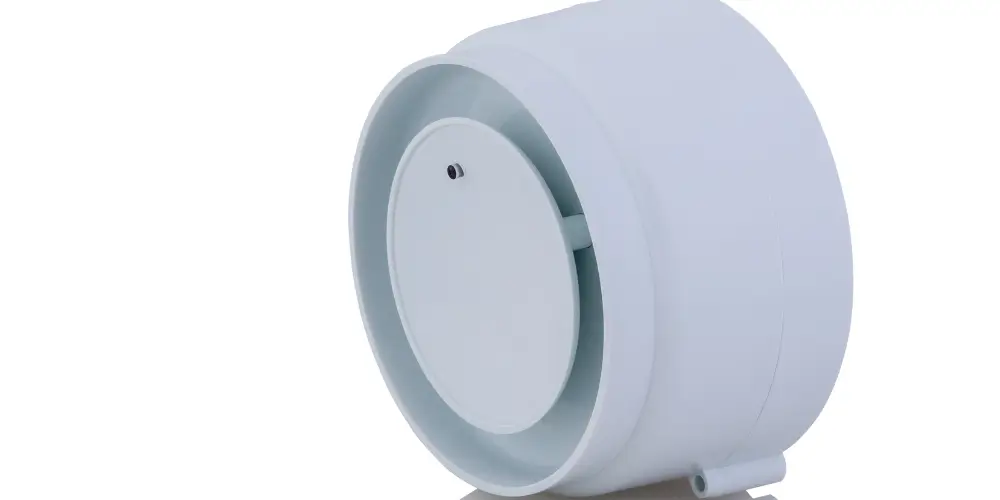
Selection starts with understanding sensing technologies. Ionization detectors react fastest to flaming fires; Photoelectric sensors excel with smoldering smoke. Regulations typically accept either if they’re listed to UL 217 (smoke) and UL 2034 or CSA 6.19 (CO). We recommend dual-sensor units where permitted to capture both signatures; Dual sensor benefits include reduced detection gaps. For CO, choose electrochemical cells with end-of-life signaling per 10-year mandates and hush features where codes allow.
| Type | Strength | Compliance Notes |
| Ionization | Rapid flaming response | UL 217 listing; nuisance sensitivity |
| Photoelectric | Smoldering detection | UL 217; preferred in many codes |
| Dual-sensor | Broader fire profile | Verify both elements listed |
| CO (electrochemical) | Accurate ppm tracking | UL 2034/CSA; end-of-life alert |
| Combination smoke/CO | Single footprint | guarantee separate signals, labeling |
Placement Rules by Room and Level
With sensing technologies selected and listed to the proper standards, we now place devices where codes require detection coverage. We follow model codes (NFPA 72, NFPA 720/UL 2034, and IBC/IRC adoptions) and local amendments. For bedroom placement, we locate smoke alarms inside each sleeping room and outside each sleeping area, on the ceiling or high on walls, avoiding corners and dead air spaces. In hallways, we center devices and keep clear of supply registers.
For kitchen guidelines, we place smoke alarms at least 10 feet from cooking appliances; if closer, use photoelectric or a listed “cooking‑nuisance resistant” model. CO alarms go outside sleeping areas and on each story. For basement requirements, we install smoke alarms at the stair bottom and CO alarms on the level. Avoid garages; use heat detectors where permitted.
Interconnection Standards and Whole-Home Coverage
Although devices meet placement rules, whole-home protection depends on proper interconnection so one alarm activates all. We verify that smoke and CO units comply with UL/ETL listings and local codes requiring hardwired or listed wireless links. Interconnection benefits include faster egress and intelligible alerts across floors.
We require alarm synchronization so temporal-3 smoke and temporal-4 CO patterns remain distinct, eliminating mixed-signal confusion. For whole home safety, we guarantee all bedrooms, corridors, basements, and attached garages participate on the same initiating circuit or approved mesh, with battery backup.
Whole-home safety demands interconnected, synchronized smoke and CO alarms with listed links and battery backup
- Specify compatibility: confirm model-to-model interoperability, RF band, and protocol; prohibit mixing non-listed bridges.
- Document topology: one network per dwelling unit; test propagation at design distances.
- Validate performance: conduct functional tests, sound-level checks, and annual retests.
Smart Alarms, Wi‑Fi Features, and Remote Monitoring Compliance
Even as smart alarms add Wi‑Fi, app control, and cloud analytics, we treat them as life-safety devices first and require full compliance with listing, cybersecurity, and notification rules. We specify third‑party listing to UL 217/UL 2034 and any applicable UL 268/UL 521 interop standards. We require authenticated firmware updates, encrypted transport (TLS 1.2+), strong credential policies, and disclosed data retention. Smart technology integration can’t impair audible/visual signaling, manual test/silence, or local event logging.
We mandate event delivery within defined latencies, with redundancy if cloud services fail. User friendly interfaces must expose status, diagnostics, and fault codes without burying safety functions. Remote monitoring must send distinct smoke, CO, and trouble alerts. Enhanced safety features—self‑testing, sensor drift compensation, and end‑of‑life notices are required and must operate offline.
Power Sources: Hardwired, Battery, and 10‑Year Sealed Units
Because power supply dictates reliability and code pathways, we classify alarms as hardwired (120 VAC with battery backup), replaceable-battery, or 10-year sealed battery units and tie each to specific installation and maintenance requirements. We specify hardwired benefits where local code mandates interconnected circuits in new construction or substantial remodels; they support multi‑station signaling and meet most residential standards.
Replaceable-battery models suit retrofits where wiring isn’t feasible, but jurisdictions may restrict them in sleeping areas. Ten‑year sealed unit advantages include tamper resistance and reduced nuisance disabling, aligning with many rental and school mandates emphasizing battery longevity and non‑replaceable cells.
- Verify authority having jurisdiction: required power source differs by occupancy and work scope.
- Confirm interconnection: wired or listed wireless as permitted.
- Document labeling: date codes, classification, and power type.
Testing, Maintenance, and Replacement Intervals
While codes vary by jurisdiction, we treat testing, maintenance, and replacement as compliance-critical tasks tied to manufacturer listings and NFPA 72/UL standards. We set testing frequency at monthly functional checks via the test button and annual device-level verification using listed aerosol for smoke and calibrated CO test kits where permitted. Log outcomes and corrective actions.
Follow these maintenance tips: vacuum sensor inlets quarterly, keep devices free of paint/grease, confirm power indicators, and update firmware on connected units. After alarms, perform a functional test once conditions normalize.
Watch for replacement signs: end-of-life chirps, nuisance alarms, failed tests, corrosion, or yellowing indicating heat exposure. Replace smoke alarms at 10 years (or manufacturer-specified), CO alarms at 5–10 years. Always re-label install dates and retest post-installation.
New Construction vs. Existing Homes: Code Differences
Although both sets aim to protect occupants, codes treat new construction and existing homes differently in scope, placement, power, and interconnection. In new builds, we follow current construction standards: hardwired alarms with battery backup, interconnection across all sleeping areas and levels, and specific spacing from HVAC registers and cooking appliances.
Existing homes typically allow listed battery-powered units, phased upgrades, and fewer wiring mandates, but they must meet minimum placement rules and device listing. Renovation challenges arise when additions or significant alterations trigger retrofits to the latest edition adopted locally. Homeowner responsibilities include verifying device type, location, and replacement timing at permit and inspection milestones.
- Scope: whole-house compliance vs. minimum retrofit.
- Power: hardwired with backup vs. sealed battery.
- Interconnection: required vs. allowed/encouraged by feasibility.
Multi‑Unit and Rental Properties: Landlord and Property Manager Duties
Two roles define compliance in multi‑unit and rental housing: owners/landlords and property managers. We must install code‑compliant smoke and CO alarms in required locations, verify power source and interconnection where mandated, and maintain devices per manufacturer and fire code schedules. Landlord responsibilities include pre‑occupancy testing, documented annual inspections, battery replacement in sealed‑cell intervals, and end‑of‑life replacement. Property managers coordinate access, maintain logs, and dispatch corrective work within statutory timeframes.
We must provide occupants written instructions and disclosure of device locations. Tenant rights include habitable conditions, prompt remediation, and non‑retaliation when defects are reported. We should require tenants to report trouble signals and prohibit disabling devices. For safety compliance, we verify audibility, tamper resistance, and centralized panel integration where applicable, retaining records for enforcement.
Jurisdiction-Specific Updates and State/Local Variations
Because smoke and CO alarm mandates vary by jurisdiction, we must track and implement state, provincial, and local amendments to model codes on a rolling basis. State variations drive differences in device type (ionization vs. photoelectric), power source (hardwired with battery backup vs. sealed 10‑year), placement (inside bedrooms, outside sleeping areas, and on each level), and replacement intervals. Local enforcement further refines timelines, permitting triggers, and penalties. We mitigate jurisdictional challenges by mapping code adoptions to project scope and occupancy.
Documentation, Inspection Prep, and Compliance Checklists
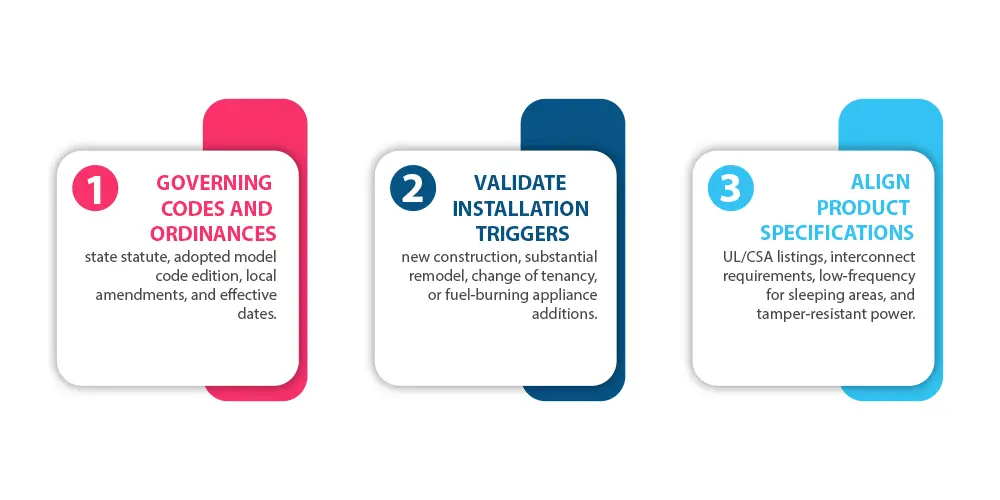
To translate code requirements into passing inspections, we formalize documentation, prepare evidence of compliance, and use standardized checklists to eliminate gaps. We anchor our process in documentation best practices: retain device specifications, install dates, locations, interconnect methods, power sources, and test logs. We tag each alarm with a unique ID and reference NFPA, UL, and local code citations. For inspection checklist tips, we verify placement heights, audibility, end-of-life dates, nuisance-reduction features, and CO sensor replacement intervals. For compliance audit essentials, we preserve change control, photo evidence, signed test results, and corrective actions with timestamps.
| Phase | Objective | Evidenc |
| Document | Traceability | Model/serial, cut sheets |
| Inspect | Conformance | Test records, photos |
| Audit | Assurance | Sign-offs, corrective logs |
We schedule re-tests and update checklists post-variance.
Frequently Asked Questions
How Do Alarms Accommodate Residents With Hearing or Visual Impairments?
They accommodate impairments through visual alerts (strobe beacons), tactile signals (bed shakers), and auditory enhancements (low-frequency 520 Hz). We specify interconnected systems, battery backup, placement standards, and testing protocols to guarantee timely detection, effective notification, and code compliance for occupants.
Are There Rebates, Tax Credits, or Insurance Discounts for Compliant Alarms?
Yes. We can access rebate programs, tax incentives, and potential insurance savings when alarms meet listed standards and local codes. We’ll verify eligibility with utilities, state energy offices, and insurers, keep receipts, and document compliant installation for audits.
What Are Recommended Practices for Vacation Homes Left Unoccupied?
We recommend documented vacation home maintenance: hardwired interconnected alarms with battery backup, ideal alarm placement strategies per code, remote monitoring, quarterly testing, seasonal occupancy checks, battery replacement before departure, humidity/temperature controls, secure utility shutoffs, neighbor keyholder, and post-event inspection logs for compliance.
How Should Alarms Be Handled During Major Renovations or Temporary Power Loss?
During major renovations, we maintain alarm coverage per renovation protocols: relocate or protect detectors, use listed temporary solutions, and document impairments. For power outage procedures, keep hardwired units on battery backup, deploy interconnected battery alarms, and verify post-restoration testing, logging all actions.
How Do Alarms Integrate With Home Security or Building Management Systems?
They integrate via standardized protocols (Z-Wave, Zigbee, IP), ensuring alarm system compatibility with panels and BMS. We enable smart home integration, supervised signaling, and remote monitoring solutions, supporting UL-listed devices, encrypted communications, event prioritization, and test/reset reporting for compliance and uptime.
Conclusion
As we wrap up, we’ve distilled the 2025 changes and the enduring requirements you must meet. Verify device types, placements, and interconnection per the latest codes, and distinguish obligations for new construction, existing homes, and rentals. Map state and local amendments, document installations, and prepare for inspections with checklists. We recommend scheduling periodic testing, battery and end‑of‑life replacement, and maintaining proof of compliance. Let’s keep ahead of code cycles and protect occupants with compliant, reliable detection.