When to Get Legal Advice in Tenant Matters? Tenants should seek legal advice at the first sign of red flags: unsafe or uninhabitable conditions, harassment or unauthorized entry, sudden or excessive rent hikes or fees, discriminatory conduct, retaliation after repair requests, or any eviction notice with firm deadlines. An attorney can verify notice compliance, protect timelines, raise defenses, and review lease clauses. Document everything with photos, written requests, and receipts. Legal aid, mediators, and tenant advocates can help. The guidance below explains when and how to act.
Key Takeaways
- Seek legal help immediately if facing eviction notices, short deadlines, or court filings; verify notice compliance and file timely answers.
- Consult a lawyer when essential repairs are ignored, conditions are unsafe, or habitability standards are violated; document all issues.
- Get advice if the landlord harasses you, enters without permission, retaliates after complaints, or pressures waivers limiting your rights.
- Ask a lawyer about rent increases, fees, or lease clauses that may violate laws, notice requirements, or rent-control limits.
- Contact legal aid for suspected discrimination; promptly report to fair housing agencies or HUD and preserve detailed records.
Table of Contents
Recognizing Red Flags That Require Legal Help
Although many landlord–tenant issues can be resolved informally, certain warning signs demand immediate legal advice. Red flags include a landlord ignoring essential repairs affecting heat, water, electricity, or safety; unauthorized entry or harassment; sudden rent hikes or fees that violate the lease or local caps; retaliation after a complaint; discrimination in housing; or pressure to sign waivers that limit tenant rights. Written notices that misstate facts, demand payment without accounting, or threaten lockouts also merit counsel.
A detached assessment favors swift documentation: save messages, photos, inspection reports, and payment records. Review the lease against local ordinances. Seek neutral guidance early to map legal options, preserve timelines, and prevent escalation. Community-based legal aid clinics and tenant unions can connect people to reputable counsel and collective support.
Eviction Notices and Court Deadlines
When an eviction notice arrives, the clock starts on strict legal timelines that determine what defenses remain available and how to assert them. Tenants facing eviction procedures should act immediately to preserve rights, document communications, and prepare for court procedures that move quickly. Missing a deadline can result in default judgments and lockouts.
1) Verify the notice: confirm service method, stated reason, cure period, and compliance with state eviction procedures. Defective notices can be challenged.
2) Calendar every deadline: cure dates, answer due dates, and hearing times. File an answer that raises defenses and requests needed accommodations or interpreters.
3) Seek legal advice early: local legal aid, bar referrals, or tenant clinics can evaluate defenses, negotiate stipulations, and prepare for hearings. Collective support strengthens voice and improves outcomes.
Habitability Issues and Unsafe Living Conditions
Habitability standards require a rental to be safe, sanitary, and functional, including heat, water, structural integrity, and protection from pests and hazards. When conditions fall short, a tenant should document violations with dated photos or video, repair requests in writing, inspection reports, and witness statements. Thorough records support notices to the landlord, complaints to housing authorities, and timely legal advice if repairs are ignored.
Defining Habitability Standards
Even before disputes arise, tenants and landlords benefit from a clear understanding of habitability the baseline legal standards that make a rental safe and fit to live in. Habitability is not a courtesy; it is grounded in tenant rights and enforced through housing codes and implied warranty laws. These standards set minimums for health, safety, and essential services, regardless of lease language.
- Safe structure and utilities: sound roofs, walls, and stairs; functioning heat, electricity, and plumbing; potable water; proper ventilation.
- Sanitation and pest control: waste removal, moisture management to prevent mold, and remedies for infestations.
- Security and life-safety: locking doors/windows, smoke and carbon monoxide alarms, and hazard-free common areas.
When these baseline requirements are unmet, legal advice helps align expectations with enforceable obligations and community well-being.
Steps to Document Violations
Start by creating a clear record that links specific conditions to legal standards. The documentation process should begin with dated photos and videos of hazards, including close-ups and wide shots for context. Maintain a log noting times, health impacts, and any communications. Save repair requests, emails, and certified mail receipts to establish notice and response timelines key to enforcing tenant rights.
Obtain third‑party confirmation when possible: inspector reports, medical notes, or contractor estimates. Keep copies of the lease, house rules, and applicable codes to show how conditions violate habitability requirements. Preserve physical evidence (e.g., mold swabs, damaged fixtures) securely.
Summarize the violations in a concise chronology, then send a written demand outlining required repairs and deadlines. If conditions persist, consult legal aid; thorough documentation strengthens collective leverage.

Discrimination and Fair Housing Violations
Discrimination claims start with recognizing conduct tied to protected characteristics such as race, color, religion, national origin, sex (including gender identity and sexual orientation), familial status, or disability. Tenants should contemporaneously document incidents, preserve messages and notices, secure witness statements, and keep a timeline. Prompt reporting to local fair housing agencies, HUD, or a state civil rights commission, and consulting counsel early, helps protect rights and remedies.
Recognizing Protected Class Discrimination
Although landlord-tenant conflicts can stem from many issues, recognizing when conduct crosses into protected class discrimination is critical to asserting rights. A tenant should assess whether actions target protected classes such as race, color, national origin, religion, sex (including gender identity and sexual orientation), familial status, disability, or other categories under local law.
Clear discrimination examples include unequal terms, steering to inferior units, harassment, or sudden rule changes applied only to certain groups. Knowing tenant rights empowers prompt action and timely legal remedies.
- Compare treatment: Are similarly situated tenants outside the group receiving better terms, repairs, or access?
- Examine patterns: Are policies neutral on paper but burdensome for a protected group?
- Note statements: Do remarks reveal bias, stereotypes, or retaliatory motives tied to identity?
Documenting and Reporting Violations
From the first questionable interaction onward, meticulous documentation is the tenant’s strongest evidence. A tenant should create dated violation records, save tenant communication (texts, emails, letters), and summarize in-person exchanges immediately after they occur. Screenshots, photos, and voice-mail transcriptions should be preserved with timestamps. Witness names and contact details belong alongside each entry. Patterns matter: track each denial, delay, or hostile remark tied to a protected characteristic.
Report promptly. File with the local fair housing agency or HUD within statutory deadlines, attaching organized violation records and a concise timeline. Keep copies of every submission and response. If retaliation appears, log it and notify counsel.
| What to Capture | Why it Matters |
| Dates, actors, quotes | Establishes credibility |
| Documents, media | Corroborates tenant communication |
| Agency filings, receipts | Proves timely reporting |
Retaliation After You Assert Your Rights
Assert rights, then watch for backlash. After filing complaints or demanding repairs, tenants may face subtle or overt retaliation tactics. An informed tenant community recognizes patterns early and seeks legal advice before harm compounds. Most states prohibit adverse actions within a protected window after exercising tenant rights, but proof and timing matter.
- Track conduct changes: sudden maintenance refusals, rule over-enforcement, service reductions, or threats. Save messages, notices, and photos, and log dates tied to protected activity.
- Evaluate causation: compare pre-complaint treatment to post-complaint shifts. Look for close timing and inconsistent explanations. Counsel can assess whether evidence meets statutory standards.
- Act promptly: send a written anti-retaliation notice, request reasons in writing, and consult a tenant attorney or legal aid. Collective documentation strengthens everyone’s position and safety.
Rent Increases, Fees, and Security Deposit Disputes
When a landlord raises rent, adds fees, or withholds a security deposit, knowing the legal boundaries determines the response. Immediate legal advice is warranted when increases exceed rent control limits, notice periods are ignored, or new fees appear without statutory authority. Counsel can verify whether utilities, pet charges, or “administrative” add-ons violate tenant rights or function as unlawful rent. For deposits, attorneys scrutinize move-in checklists, itemized deductions, and deadlines for return, challenging wear-and-tear mislabeling and improper cleaning or repainting charges.
If a landlord conditions repairs or renewal on paying disputed sums, counsel can preserve claims and prevent waiver. Legal help also assists with demand letters, agency complaints, and small-claims filings, creating documentation and community leverage that affirms tenants belong and are protected.
Problematic Lease Clauses and Renewal Traps
Two common flashpoints in tenant matters are hidden lease traps and renewal provisions that erode rights. A careful legal review can expose lease loopholes that shift repair costs, waive habitability protections, or impose one-sided penalties. Renewal negotiations also demand scrutiny, especially auto-renewal terms that trigger rent jumps or shorten notice periods. Counsel helps tenants reclaim leverage, align terms with local law, and preserve community stability.
- Identify stealth clauses: look for liquidated damages, broad entry rights, attorney-fee asymmetry, or “as-is” language undermining repairs.
- Control renewal mechanics: insist on written notice windows, cap increases, and clarify option vs. landlord discretion.
- Guard assignment/subletting rights: prevent blanket bans and require reasonable-consent standards.
Early advice closes loopholes and supports fair, sustainable tenancy.
Breaking a Lease or Early Termination Situations
Lease terms that strain fairness or stability often lead to a harder question: ending the tenancy early without compounding risk. A measured approach centers on tenant rights, state-specific termination grounds, and careful lease negotiation. Legal advice becomes prudent when safety, uninhabitable conditions, discriminatory practices, or unexpected deployment/job relocation arise, or when early-termination clauses impose disproportionate penalties. Counsel can verify notice periods, mitigate fees, and negotiate a release that preserves credit and deposit claims. Community-minded solutions like landlord-approved re-renting can align interests and reduce loss.
| Situation | Legal Focus | Practical Move |
| Unsafe/Uninhabitable | Warranty of habitability | Certified notice; cure deadline |
| Domestic violence | Statutory protections | Confidential early release |
| Job transfer/deployment | Federal/state relief | Provide orders; negotiate fees |
| Health hazards | Code enforcement | Document inspections |
| Landlord breach | Contract defenses | Settlement-oriented lease negotiation |
Early guidance protects dignity and exit terms.
Preparing Documentation and Evidence for Your Case
Before seeking counsel, a tenant should assemble an essential documents checklist: lease, amendments, notices, emails or texts, payment records, repair requests, photos, inspection reports, and receipts. They should also build a clear evidence timeline marking dates of issues, landlord responses, and any escalation. This disciplined record protects rights, supports legal strategy, and strengthens credibility before a court or mediator.
Essential Documents Checklist
Although every dispute is unique, assembling a complete paper trail is nonnegotiable. An organized file signals credibility, protects tenant rights, and equips counsel to act quickly. Core items should be current, legible, and accessible in digital and hard copy.
- Contracts and notices: Signed lease agreements and addenda; renewal or termination letters; rule summaries; any landlord policy sheets; all notices to cure, quit, or increase rent.
- Communications: Emails, texts, and letters with landlords, managers, or agents; certified mail receipts; call logs; written requests for repairs or accommodations; responses or refusals.
- Condition and payment proof: Dated photos and videos; inspection reports; repair invoices; rent ledgers; bank statements; receipts for deposits, utilities, or fees; city code complaints and outcomes; insurance claims.
This checklist strengthens standing, reduces disputes over facts, and fosters fair resolution.
Organizing Evidence Timeline
Building on a complete document set, a chronological evidence timeline anchors the tenant’s narrative and proves key facts. Effective evidence organization begins by listing each event with a date, source, and short description lease signing, repair requests, inspection notices, rent receipts, and landlord responses. Each entry should link to a document, photo, email, or text, labeled consistently for quick retrieval.
For timeline creation, they should use a simple spreadsheet or case notebook, reserving a column for legal issues implicated habitability, retaliation, discrimination, or notice defects. Gaps or contradictions become visible, guiding follow‑up records or witness statements. Counsel can then assess credibility and remedies sooner. Sharing the timeline with advocates promotes solidarity, reduces stress, and guarantees nothing essential is overlooked at hearings or mediation.
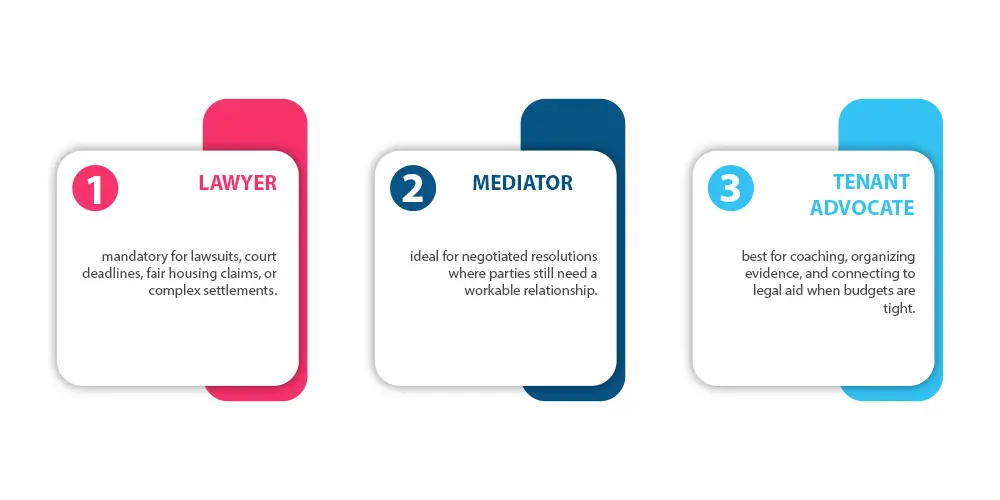
Choosing Between a Lawyer, Mediator, or Tenant Advocate
When should a tenant call a lawyer, seek a mediator, or work with a tenant advocate? The answer depends on urgency, stakes, and the need for tenant representation. A lawyer is essential when facing eviction filings, retaliation, discrimination, severe habitability issues, or when court dates are set. Mediators help when both sides want a faster, lower-cost alternative dispute process to resolve repairs, payment plans, or communication breakdowns. Tenant advocates guide with rights education, document prep, and referrals, building confidence and community.
Frequently Asked Questions
How Do I Find Free or Low-Cost Tenant Legal Services Near Me?
They can search local legal aid directories, call 211, and contact tenant resources at city housing departments or bar associations. They should ask about sliding-scale clinics, law school programs, eviction defense networks, and nonprofits serving their community and language.
What Questions Should I Ask During an Initial Consultation With a Lawyer?
They should ask about tenant rights, lease agreements clarity, timelines, remedies, evidence needed, communication expectations, fee structures, likely outcomes, risks, next steps, and resources. They should also confirm experience with similar cases and local housing court practices.
Can I Represent Myself Effectively in Housing Court, and How?
Yes, a tenant can represent themselves effectively by anticipating self representation challenges and applying effective court strategies: organize documents, learn local rules, practice concise storytelling, meet deadlines, request accommodations, seek court help centers, and assert rights respectfully and confidently.
How Long Do Tenant Legal Disputes Typically Take to Resolve?
Tenant legal disputes typically take weeks to many months. Dispute duration depends on resolution factors: court backlog, evidence readiness, jurisdiction, landlord responsiveness, and representation. Tenants should document everything, meet deadlines, seek mediation, and assert rights collectively to strengthen timelines and outcomes.
What Documents Should I Bring to a Legal Consultation for Tenant Issues?
They should bring lease agreements, eviction notices, payment records, repair requests, correspondence with landlords, photos or videos of conditions, inspection reports, utility bills, roommate agreements, identification, and a timeline of events. Organized documentation strengthens rights-focused, community-grounded legal advocacy and outcomes.
Conclusion
Knowing when to seek legal advice protects tenants’ rights and strengthens outcomes. When red flags appear—evictions, unsafe conditions, discrimination, retaliation, or unfair lease terms—timely counsel helps meet deadlines, preserve defenses, and assert remedies. Practical steps include organizing documents, logging communications, and evaluating options among attorneys, mediators, or tenant advocates. Early guidance can prevent costly mistakes, negotiate better resolutions, and position a tenant to break a lease lawfully if needed. Vigilance and swift action remain tenants’ most effective tools.