A simple risk register helps landlords list, score, and manage threats to their rental properties in one place. It records risks such as repairs, safety issues, tenant problems, and legal or financial pressures, along with likelihood, impact, controls, and owners. This structure reduces overwhelm, improves decisions, and turns vague worries into clear actions. By using basic columns in a spreadsheet or template, any landlord can start building a practical register that becomes far more useful step by step.
Key Takeaways
- Create a simple spreadsheet listing each property, major systems (roof, plumbing, electrics, access, safety features), and a short plain-language description of each risk.
- Add columns for likelihood and impact (e.g., 1–5 scales) and multiply them to get a combined risk rating for easy prioritization.
- Record existing controls (insurance, boiler servicing, smoke alarm checks) and planned mitigation actions with clear owners, target dates, and status.
- Sort and review the register monthly, focusing first on high-likelihood, high-impact risks that most threaten safety, income, or legal compliance.
- Treat the register as a living document, updating it after incidents, inspections, major repairs, or tenancy changes to keep it accurate and useful.
Table of Contents
What a Risk Register Is and How It Works for Landlords
In property management, a risk register is a structured document used to identify, assess, and track potential threats that could impact a landlord’s rental business. It brings scattered worries late rent, property damage, legal issues into one shared, organized view.
A typical risk register lists each risk, its cause, possible impact, likelihood, and existing controls, plus a clear “owner” for follow‑up. Landlords, whether solo or in a small team, can review it together, so everyone sees the same picture and speaks the same language.
It usually lives in a spreadsheet or simple software table. Over time, it is updated as risks change, are resolved, or new ones appear, becoming a living record of collective awareness and responsibility.

Key Benefits of Using a Risk Register in Property Management
Why do organized landlords consistently stay ahead of problems that catch others off guard? A simple risk register gives them shared structure. It turns scattered worries into a clear list of potential issues, owners, and next steps. This helps landlords feel less alone, because decisions are based on a visible plan rather than gut reactions.
A risk register also supports calmer communication with tenants, partners, and trades. Everyone can see what matters most and what has already been handled.
| Benefit Area | How the Risk Register Helps | Result for Landlords |
| Clarity | Centralizes concerns in one place | Less overwhelm |
| Prioritization | Highlights what truly needs attention | Better daily focus |
| Accountability | Assigns clear ownership | Stronger teamwork |
| Tracking Progress | Records actions and status | Confidence in follow‑through |
| Communication | Aligns expectations with others | More trust and cooperation |
Identifying Common Risks in Rental Properties
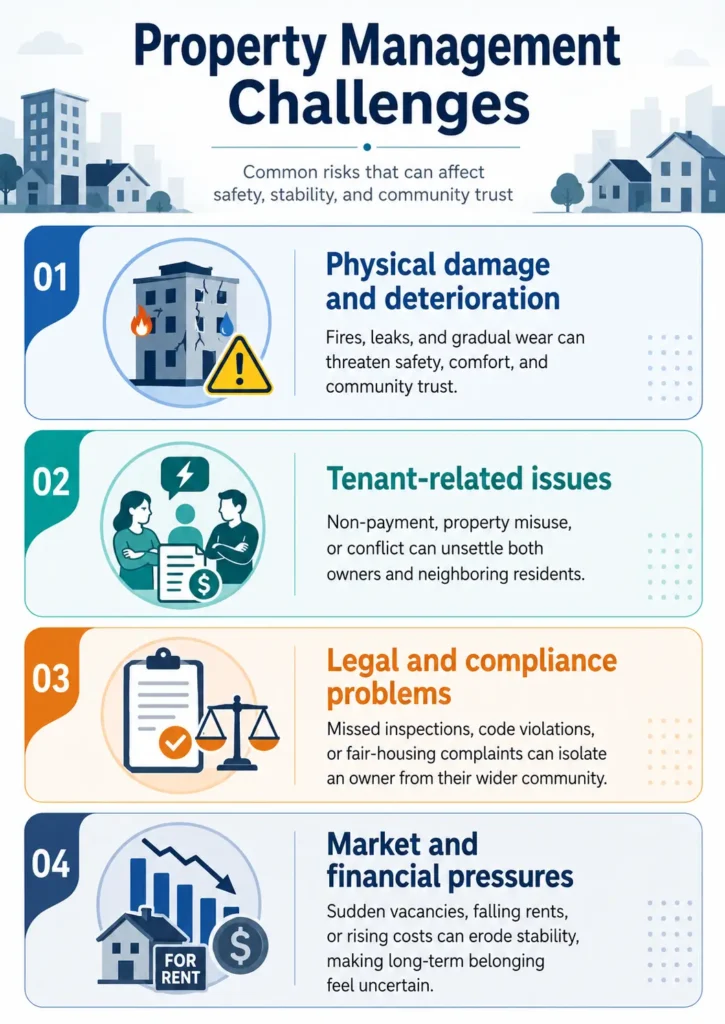
Before a risk register can be useful, the major threats facing a rental property must be clearly named. Owners often sense that “something could go wrong,” yet feel unsure how to describe it. Identifying common risks turns vague anxiety into shared understanding and practical focus.
Choosing a Simple Format and Tools for Your Risk Register
When creating a risk register for rental properties, landlords must first decide whether a simple spreadsheet or a pre-built template best suits their needs and skill level.
This choice will influence how easily risks can be added, tracked, and updated over time. Regardless of the tool, the register should capture essential fields such as risk description, likelihood, impact, mitigation actions, and responsible person.
Spreadsheet Versus Templates
At the practical level, a landlord’s risk register is only as useful as the format chosen to manage it. Many small landlords start with a simple spreadsheet because it feels familiar, flexible, and free. Others are drawn to ready‑made templates often shared in local landlord groups or online communities because they provide structure and a sense of not doing this alone.
Spreadsheets offer customization, but can become inconsistent when multiple properties or partners are involved. Templates reduce setup time and create shared expectations, yet may feel restrictive if a landlord wants to adapt quickly.
Landlords often weigh:
- Desire for simplicity versus structure
- Comfort with DIY tools versus guided layouts
- Need for collaboration with others
- Wish to align with trusted landlord communities
Essential Risk Fields
How does a landlord turn a vague sense of “things that could go wrong” into a clear, usable record? They start by agreeing on a handful of essential fields every risk entry should include, regardless of tool or template.
Each row needs: a short, specific risk name; a brief description; the property or unit it affects; and the likely cause. Next come impact and likelihood ratings, using a simple shared scale, plus an overall risk score to sort priorities. To feel in control together, landlords also record the risk owner, existing controls, and planned actions with target dates. Finally, a status field and last-reviewed date help the group see what’s active, what’s resolved, and what needs fresh attention.
Essential Columns and Data Points to Include
A practical risk register for rental properties depends on capturing a small set of critical data points in a consistent way. By structuring entries around core property details, risk likelihood and impact, current controls, clear owners, and key dates, landlords can see at a glance where attention is needed.
The following sections outline how each of these columns should be defined and used so the register remains both actionable and easy to maintain.
Core Property Details
Clear core property details form the foundation of an effective risk register, ensuring each asset can be accurately identified, assessed, and managed over time. Owners who document these elements create a shared language for everyone involved partners, family members, and managers so no property feels like an isolated concern.
A simple register should capture factual, stable identifiers that anchor all future entries. Emotion often surfaces when key details are missing, especially in stressful moments. To prevent that, many owners include:
- Property name, full address, and unit identifiers
- Ownership structure and key contacts (partners, managers)
- Acquisition date, purchase price, and current estimated value
- Property type, age, construction details, and primary use
Together, these fields help a landlord community stay coordinated and confident.
Risk Likelihood and Impact
When owners move beyond basic property details, risk likelihood and impact become the core decision-making columns in a rental property register. These fields help owners see not just what might go wrong, but how often and how severely it could affect their shared investment community.
Likelihood is typically scored on a simple scale (for example, 1–5), reflecting how probable a risk is within a given period. Impact uses a similar scale, capturing potential financial loss, safety concerns, or disruption to tenants.
A combined “risk rating” column multiplies likelihood and impact, guiding attention toward what truly matters.
| Risk Example | Likelihood (1–5) | Impact (1–5) |
| Boiler failure | 3 | 4 |
| Tenant non-payment | 4 | 5 |
| Storm roof damage | 2 | 5 |
| Minor vandalism | 3 | 2 |
Controls, Owners, and Dates
Building on likelihood and impact, a useful rental property risk register also tracks how each risk is controlled, who is responsible, and key dates. These details help owners feel they are not facing uncertainty alone, but working within a clear, shared structure.
- Controls – Brief notes on existing safeguards (e.g., annual boiler service, smoke alarm checks) show the community’s commitment to care and reliability.
- Risk Owner – Naming a specific person or role creates accountability and reassures everyone that no risk is “orphaned.”
- Target Date – A clear deadline for action turns anxiety into a manageable plan.
- Review Date – Scheduled check‑ins invite continual improvement and reinforce that safety, comfort, and stability are ongoing, collective priorities.

Step‑by‑Step Process to Build Your First Risk Register
For many rental property owners, creating a first risk register becomes far easier by following a structured sequence of steps. They begin by listing each property and major system (roof, plumbing, electrics, access, safety features) in a simple table or spreadsheet. For many rental property owners, a simple table of each property and major system is the ideal starting point
Next, they note events that could realistically go wrong for each item such as leaks, break‑ins, or compliance lapses using plain, practical language. They then record what is already in place: insurance, inspections, service contracts, or house rules. After that, they assign each risk a clear owner, often themselves, a partner, or a trusted contractor. Finally, they add review dates and update notes, turning the register into a shared, living document that supports the whole rental community’s stability.
Prioritizing Risks With Impact and Likelihood Ratings
Effective prioritization turns a raw risk register into a practical decision tool by comparing how likely each risk is and how severely it would affect the property business. Owners give each risk two scores: likelihood (how often it might occur) and impact (how disruptive it would be to income, safety, or reputation). Using a simple 1–5 scale keeps ratings consistent and easy to compare across properties.
They then sort the list so high‑likelihood, high‑impact risks rise to the top, forming a shared view of what truly matters now, not someday.
- Feel calmer by seeing the worst risks clearly named.
- Protect residents and neighbors as a united community.
- Guard income so the portfolio feels sustainable.
- Stand alongside other careful owners, not alone.
Turning Risks Into Actionable Mitigation Plans
Translating a prioritized risk list into concrete action requires turning each line item into a clear “who, what, when, and how.” Instead of treating the register as a static document, owners assign specific controls or responses to each high‑priority risk, define responsible parties, set deadlines, and note required resources or budget.
Each row in the register becomes a small, shared plan: the risk (what might go wrong), the chosen strategy (avoid, reduce, transfer, or accept), and the exact tasks to carry out. For example, “water damage from leaks” might map to annual roof inspections, plumbing checks, and clear tenant reporting instructions. By capturing these steps in the register, owners create a practical tool their whole team can rally around.
Keeping Your Risk Register Updated and Part of Your Routine
Regularly revisiting the risk register turns it from a one‑time exercise into a living management tool. Consistent review turns your risk register from static paperwork into a practical, day‑to‑day decision tool
Owners who treat updates as a shared routine rather than an occasional chore—gain calm, clarity, and a sense of control. A monthly review, plus a quick check after any incident or major change, keeps risks aligned with real life at the property and in the wider community.
They might anchor this habit with a simple calendar reminder and a consistent checklist:
- Review any new maintenance issues, tenant concerns, or neighborhood changes.
- Re‑score existing risks and close those that are genuinely resolved.
- Add new mitigation actions and assign clear responsibility.
- Capture lessons learned, strengthening both the register and the ownership community.
Frequently Asked Questions
How Often Should I Review My Risk Register With My Insurance Broker?
They should review it with their broker at least annually, and after any major change or incident. This rhythm helps them feel supported, stay aligned on coverage, and keep the shared safety picture current and honest.
Can a Risk Register Help Justify Rent Increases to Tenants?
Yes, a risk register can support rent increases when shared transparently. It shows tenants how safety, maintenance, and improvements are managed, helping them feel protected, included in the process, and more accepting of fair, well‑explained adjustments.
How Do I Adapt a Risk Register for Short‑Term Vacation Rentals?
They adapt a risk register by adding guest‑turnover, booking platform, cleaning, and neighbor‑relation risks, then scoring likelihood and impact. Shared mitigation notes, checklists, and communication plans help everyone feel protected, welcomed, and included in a well‑cared‑for space.
What Legal Records Should I Store Alongside My Risk Register?
They should store leases, guest agreements, insurance policies, safety inspections, licenses, permits, incident reports, tenant communications, contractor invoices, maintenance logs, and local compliance notices, keeping everything organized so the whole rental community feels protected, accountable, and supported.
How Can Multiple Co‑Owners Collaboratively Manage a Shared Risk Register?
They can manage it together by using a shared online spreadsheet, assigning clear responsibilities, agreeing review dates, and documenting decisions. Regular check‑ins and transparent updates help every co‑owner feel included, heard, and jointly accountable.
Conclusion
A simple risk register gives landlords a clear, structured view of potential issues before they become costly problems. By listing risks, rating their impact and likelihood, and assigning mitigation actions, property owners can move from reactive firefighting to proactive management. Kept up to date and reviewed regularly, the register becomes a living tool that supports safer properties, better tenant experiences, and more predictable financial outcomes for rental portfolios of any size.