
Managing tenants with health or mobility needs safely means understanding legal duties, preventing discrimination, and protecting confidentiality. Landlords should invite voluntary disclosure, use plain language, and review needs regularly. With consent, they assess daily living tasks, agree reasonable adjustments, and record decisions. Practical adaptations, personal evacuation plans, and clear risk assessments reduce hazards. Secure record-keeping, proportionate safeguarding, and joined-up work with professionals and families provide consistent support, and the following guidance explains how to put this into practice.
Key Takeaways
- Offer equal access to housing, identify needs sensitively, and agree reasonable adjustments without discrimination, following accessibility and safety regulations.
- Obtain informed consent before recording or sharing health information, keep records minimal and secure, and explain clearly how information supports tenancy.
- Assess daily living and property use jointly with tenants, plan adaptations with professional input, and review needs regularly or after significant health or care changes.
- Implement practical adaptations—such as grab rails, ramps, and improved lighting—ensuring they meet building safety standards and genuinely help the tenant function safely.
- Complete individual risk assessments and personal emergency evacuation plans, escalate safeguarding concerns appropriately, and coordinate with carers and agencies for consistent support.
Table of Contents
Understanding Legal Duties and Disability Rights
How do legal obligations intersect with disability rights in rental housing? A landlord must navigate a framework that protects tenants while supporting safe, welcoming homes. Equal access is not optional; it is a legal and ethical standard. Human rights and anti‑discrimination laws prohibit refusing a tenancy or limiting use of a home because of disability.
Obligations usually include considering reasonable accommodations, adjusting rules or physical features when this does not create undue hardship or compromise safety codes. Landlords must also treat disability information as confidential, sharing it only when necessary and lawful. When uncertain, they are expected to seek guidance rather than guess. In doing so, they help create housing where tenants with health or mobility needs can belong confidently.
Identifying Health and Mobility Needs Sensitively
Legal duties are only effective when health and mobility needs are recognised respectfully in everyday interactions. A thoughtful landlord does not assume disability, nor ignore visible signs of difficulty. Instead, they create space for tenants to share what they are comfortable disclosing, at their own pace, without pressure.
Sensitive identification focuses on listening, not judging. Open questions and neutral language help tenants feel they are part of a community rather than a problem to be solved. For example:
- Ask permission before discussing any health or mobility topic.
- Use phrases such as “Is there anything that would help you feel more at ease at home?”
- Reassure tenants their information is confidential and used only to support them.

Making Reasonable Adjustments to the Property
When planning reasonable adjustments to a property, a landlord must first translate a tenant’s specific health or mobility needs into clear, documented requirements. From there, they can consider practical adaptations, such as handrails, ramps, bathroom modifications, or layout changes, that meaningfully improve safety and access. Throughout this process, they must stay within the boundaries of legal duties and compliance, ensuring that any changes meet relevant housing, accessibility, and equality regulations.
Assessing Individual Tenant Needs
Before deciding what changes to make to a property, a landlord must first understand the specific health or mobility needs of the individual tenant. This assessment is not about assumptions; it is about listening carefully so the tenant feels recognised and secure in their home.
A respectful assessment usually includes:
- Gathering information, with consent, about the tenant’s condition, daily routines, and any professional advice they have received, focusing on how these affect safe use of the home.
- Walking through the property together to identify points of difficulty, such as entrances, bathrooms, and kitchen areas, from the tenant’s perspective.
- Agreeing priorities in writing, so both parties share a clear understanding of needs, limits, and timescales, reinforcing trust and a sense of shared responsibility.
Practical Property Adaptations
With the tenant’s needs clearly identified, the next step is to translate that understanding into practical changes to the property that enable safer, more independent living. Thoughtful adaptations signal that tenants are welcome, not merely accommodated.
Adaptations may be small but significant: lever handles instead of round knobs, brighter task lighting, or contrasting colours on steps and doorframes to aid visibility. In bathrooms, grab rails, level-access showers, non-slip flooring, and higher toilet seats can reduce anxiety and falls. Around entrances, ramps, widened doorways, and secure handrails support confident movement in and out of the home.
Throughout, landlords benefit from involving tenants in decisions, checking what genuinely helps day to day, and ensuring changes blend with the home’s character, not feel clinical.
Legal Duties and Compliance
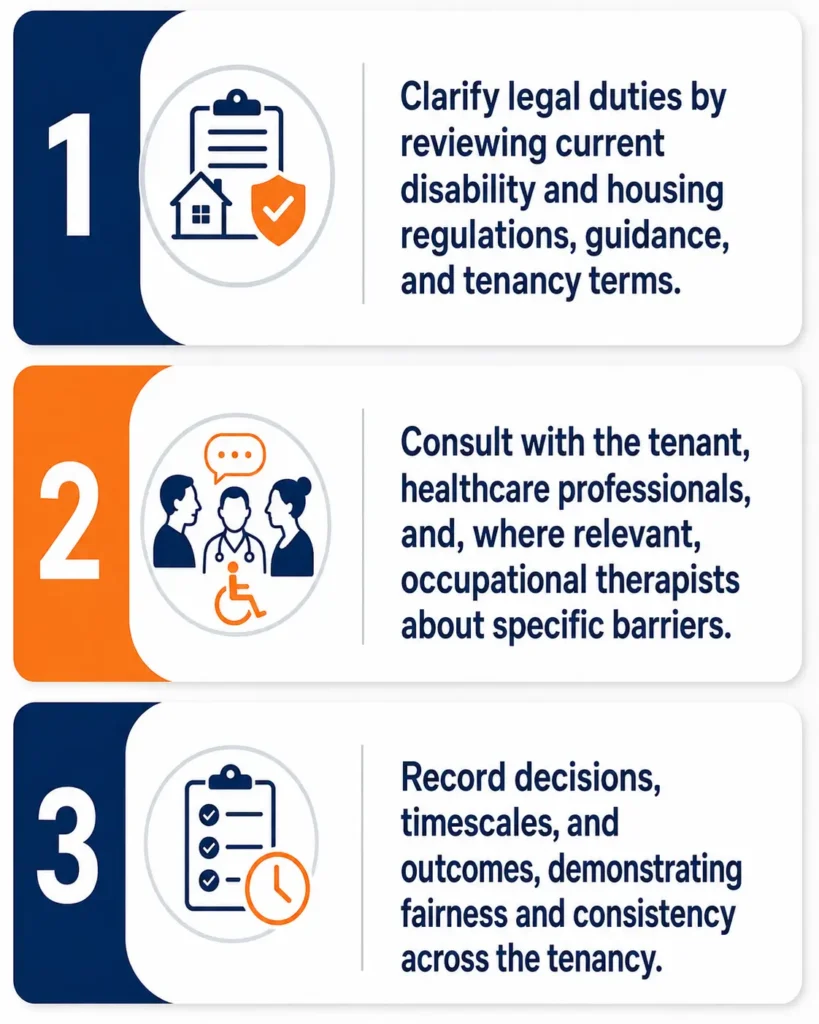
Practical adaptations do more than improve comfort; they sit within a clear legal framework that shapes what landlords must do and how they must do it. Equality and housing legislation typically require “reasonable adjustments” so disabled tenants can use and enjoy their home on an equal footing with others.
Landlords are expected to listen carefully to disclosed needs, assess practicality, and respond in good time. A structured approach helps:
Working With Carers, Support Services, and Families
In many tenancies involving health or mobility needs, effective communication with carers, support services, and family members is essential to keeping the tenant safe and the property well managed. Landlords benefit from viewing these relationships as a shared network of support rather than an inconvenience or boundary issue.
Clear consent from the tenant, where possible, should guide what information is shared and with whom. Once expectations are agreed, regular, respectful contact helps everyone feel included and confident.
Landlords can invite carers and relatives to discuss practical matters such as access arrangements, emergency contacts, adaptations, and planned visits from professionals. When landlords listen carefully, avoid assumptions, and recognise the expertise of those involved, trust is built and the home is more likely to remain stable, welcoming, and supportive.
Risk Assessments, Safeguarding, and Record-Keeping
Effective management of tenants with health or mobility needs requires structured individual risk assessments, clear safeguarding measures, and disciplined record-keeping. Landlords must identify specific risks to each occupant, put proportionate protections in place for vulnerable tenants, and define who is responsible for acting on concerns. At the same time, they must handle personal information lawfully and respectfully, ensuring consent, confidentiality, and secure storage of records.
Conducting Individual Risk Assessments
Beyond day‑to‑day management, conducting individual risk assessments is central to supporting tenants with health or mobility needs safely and lawfully. Each assessment recognises the tenant as a person first, identifying how the home, shared spaces, and routines can be shaped so they feel secure, respected, and included.
An effective assessment process usually:
- Maps the tenant’s daily activities, identifying points where access, lighting, or layout increase the likelihood of harm.
- Considers medical, mobility, and communication needs alongside the physical environment, noting practical adjustments that promote independence and dignity.
- Agrees clear, proportionate control measures and review dates, recording decisions transparently so tenants, landlords, and support networks understand what has been put in place, why it matters, and how it will be monitored over time.
Safeguarding Vulnerable Occupants
Sound individual risk assessments naturally lead into a wider duty to safeguard vulnerable occupants, ensuring that concerns are identified early, acted on proportionately, and documented properly. Housing providers are expected to notice patterns of risk, respond with calm consistency, and make residents feel that they are part of a community that looks out for one another.
Safeguarding involves linking day‑to‑day observations with clear procedures: knowing when to escalate worries, how to coordinate with health or support services, and how to record decisions so no one is left unseen or unheard.
| Safeguarding Focus | Practical Action | Inclusive Outcome |
| Emerging risk | Note concern | Early support |
| Escalation | Inform manager | Joined‑up response |
| Multi‑agency input | Share key facts | Consistent help |
| Follow‑up | Review actions | Ongoing safety |
| Record‑keeping | Log dates/actions | Clear accountability |
Confidential Records and Consent
Clear handling of confidential records underpins every risk assessment and safeguarding decision involving tenants with health or mobility needs. Accurate information helps providers understand risks while showing tenants that they are respected members of the housing community, not problems to be managed. Records must be limited to what is necessary, stored securely, and shared only with clear justification. Consent should be informed, specific, and revisited when circumstances change. Tenants need plain-language explanations of why information is collected, who may see it, and how it supports their safety and independence.
Housing providers can build trust by:
- Recording only essential details for agreed purposes.
- Gaining written consent before sharing information, wherever possible.
- Auditing access logs and retaining records for defined periods only.
Planning for Emergencies and Evacuations
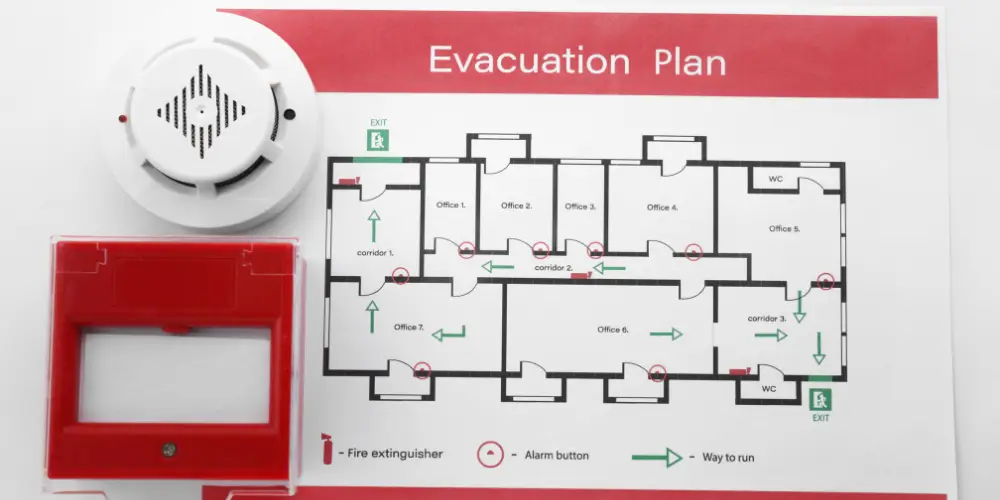
In any rented building, emergency and evacuation planning must account specifically for tenants with health or mobility needs. Landlords and housing providers are expected to map how each tenant can exit safely, identifying who may need extra time, assistance, or equipment. This includes recognising wheelchair users, tenants with visual or hearing impairments, long‑term health conditions, or mental health needs that affect decision‑making under stress.
Clear, inclusive procedures are essential. Providers may develop personal emergency evacuation plans (PEEPs) that set out routes, refuge points, and roles for staff or volunteers. Visual, tactile, and audible alerts should be considered so no one is left unaware. Evacuation chairs, widened routes, and well‑marked safe waiting areas help guarantee that every tenant can leave or be reached safely.
Ongoing Communication, Reviews, and Managing Change
Regular communication between landlords, housing providers, and tenants with health or mobility needs is essential to keep support arrangements accurate and effective. Ongoing dialogue helps everyone feel recognised, heard, and safe, especially when circumstances change. Clear, predictable contact shows tenants they belong to a stable and responsive housing community. Regular reviews make certain that support does not remain static while needs evolve.
Annual or biannual reviews work well, with extra check‑ins after hospital admissions, bereavement, or changes in care packages. A simple structure can guide these conversations:
- Confirm current needs, adjustments, and any difficulties in daily living.
- Review what is working well, what feels burdensome, and where gaps exist.
- Agree follow‑up actions, responsibilities, and timeframes, then record and share them.
Frequently Asked Questions
Can I Ask for a Guarantor if the Tenant Receives Disability Benefits?
Yes, a landlord may request a guarantor, but it must be applied consistently to all similar applicants. They should avoid discrimination, clearly explain criteria, and guarantee the tenant still feels respected, welcome, and fairly treated.
How Should I Handle Repeated Noise Complaints About a Mobility Scooter?
They should investigate the complaints, speak calmly with everyone involved, and explore practical solutions like parking areas, rubber mats, or time limits. They must balance peaceful enjoyment for neighbors with reasonable adjustments that respect the scooter user’s rights.
Can I Increase Rent After Installing Adaptations Funded by a Grant?
They usually cannot raise rent solely because adaptations were grant‑funded. Law often requires no financial penalty for agreed adjustments. Tenants are encouraged to check their tenancy agreement, local regulations, and seek independent housing advice together if anything feels uncertain.
What if Other Tenants Complain About Perceived “Preferential Treatment” for Disabled Tenants?
They should calmly explain that adjustments for disabled tenants are legal rights, not perks. Clear communication, inclusive meetings, and written policies help everyone see these changes as part of creating a fair, welcoming home for all residents.
How Do I Sensitively End a Tenancy When Care Needs Exceed What I Can Provide?
They should explain, with warmth and clarity, that needs now exceed what housing law and their role safely allow. Offer written reasons, reasonable notice, signpost support services, and invite conversation, reassuring the tenant they’re not at fault or abandoned.
Conclusion
In managing tenants with health or mobility needs, landlords must balance legal duties, compassion, and practical planning. By understanding disability rights, identifying needs sensitively, and making reasonable adjustments, they help tenants live safely and independently. Close collaboration with carers, support services, and families, supported by thorough risk assessments and records, strengthens safeguarding. Clear emergency plans and ongoing communication guarantee that as circumstances change, support and accommodation remain appropriate, dignified, and focused on the tenant’s wellbeing.