
A landlord is the property owner or authorized lessor who grants occupancy in exchange for rent, confers possessory rights, and retains a reversionary interest. We draft and enforce leases, manage habitability and quiet enjoyment, collect rent, handle repairs, conduct inspections, and guarantee statutory compliance. Income comes from base rent, escalations, and ancillary fees. We properly collect and account for security deposits, document conditions at move-in and move-out, and resolve disputes or evictions per law. Here’s what else matters next.
Key Takeaways
- A landlord is a property owner or authorized lessor who grants tenants occupancy in exchange for rent.
- They provide tenants possessory rights while retaining a reversionary interest and enforcing lease covenants.
- Core duties include habitability, maintenance, safety compliance, and honoring quiet enjoyment.
- They manage leases, collect rent, conduct inspections, coordinate repairs, and handle disputes per law.
- Landlords must follow legal procedures for notices, deposits, rent adjustments, and, if needed, lawful eviction.
Table of Contents
Definition and Core Role
A landlord is a property owner or authorized lessor who grants a tenant the right to occupy real property in exchange for rent under a lease or rental agreement. In this role, we confer possessory rights, retain reversionary interests, and enforce covenants. We manage landlord responsibilities such as habitability, quiet enjoyment, maintenance, and compliance with statutory disclosures. We administer property management functions: rent collection, repairs, inspections, and risk mitigation. We maintain tenant relationships through lawful communication, notice, and dispute resolution, while safeguarding security deposits and adhering to fair housing obligations. We draft, interpret, and execute lease terms, monitor performance, and pursue remedies for breach, including cure, damages, or eviction consistent with due process. Our core role aligns legal compliance with asset preservation and rental income.
Types of Landlords
Though our legal duties remain grounded in leasehold principles, we categorize landlords by ownership structure and operational posture: individual owners (natural persons) self-managing or delegating to agents; institutional owners (REITs, funds, insurers) operating through professional managers; corporate owners holding title via LLCs or corporations for liability insulation; public or quasi-public housing authorities administering statutory programs; and specialized landlords such as master lessors, ground lessors, and sublessors who convey derivative possessory interests. We also classify by asset class and use. Residential landlords lease dwelling units subject to habitability, notice, and fair housing regimes. Commercial landlords negotiate bespoke covenants, allocate maintenance via net structures, and address exclusivity, use, and assignment. Vacation rental landlords operate transient accommodations, maneuvering licensing, local ordinances, and platform rules. Each category implicates distinct compliance, documentation, and risk allocation profiles.

How Landlords Earn Income
Two primary revenue streams drive landlord income: base rent and ancillary consideration. We collect base rent under a leasehold estate in exchange for exclusive possession. We adjust rent via escalation clauses, percentage rent in commercial contexts, and fair‑market rent renewals. Ancillary consideration includes fees for parking, storage, utilities reimbursement, late charges permissible by statute, pet rent, and month‑to‑month premiums. We may also derive income from common‑area maintenance allocations and submetering where lawful.
Our rental income strategies prioritize predictable cash flow and risk allocation. We screen occupants, calibrate security deposits within statutory caps, and enforce lease covenants to minimize arrears. For investment properties, we structure term, options, and rent‑increase schedules to create durable passive income while preserving habitability duties and compliance with rent control, anti‑discrimination, and notice requirements.
Property Acquisition and Financing
Before we collect rent, we underwrite the asset and secure capital on terms that align risk with projected cash flows. We begin with rigorous property valuation, using income, sales, and cost approaches to confirm fair market value and downside scenarios. We test investment strategies against our return thresholds, liquidity needs, and hold period. We model net operating income, capital expenditures, and sensitivity to vacancies, rates, and taxes.
We structure acquisition through appropriate entities, conduct due diligence, and clear title, zoning, and environmental contingencies. For financing options, we compare fixed versus floating debt, amortizing versus interest-only, leverage ratios, and covenants. We evaluate recourse exposure, prepayment penalties, and debt service coverage. Where accretive, we add mezzanine capital or preferred equity to optimize capital stack and limit dilution.
Lease Agreements and Key Clauses
Contracts govern occupancy. In a lease, we memorialize the lease terms, identify the premises, parties, and duration, and allocate obligations. We define possession date, condition on delivery, and maintenance responsibilities. We specify use restrictions, subletting and assignment, insurance, indemnification, habitability, and default remedies. We delineate notice procedures, cure periods, and dispute resolution, often selecting venue and governing law.
We articulate key provisions protecting tenant rights: quiet enjoyment, non-discrimination, reasonable access standards, and security deposit accounting. We also state our entry rights for inspections and repairs, with advance notice except in emergencies. We address alterations, fixtures, and surrender conditions, including ordinary wear and tear. We set rules for utilities, common areas, and compliance with statutes. Clear drafting prevents ambiguity and mitigates litigation risk.
Rent Setting, Collection, and Increases
One core function of landlording is pricing rent lawfully and collecting it consistently. We benchmark current rates against rental market trends, apply statutory caps where applicable, and document rationale to withstand scrutiny. We use rent negotiation strategies that balance vacancy risk, concessions, and term length. For increases, we provide written notice, observe rent-control and just-cause ordinances, and guarantee timing aligns with lease provisions.
| Item | Example |
| Valuation Basis | Comparable leases, vacancy rates |
| Increase Protocol | 30–90 days’ notice, capped percentages |
| Tenant Payment Methods | ACH, card, certified funds |
We standardize due dates, late fees, and cure periods, enforcing them uniformly to avoid claims of selective enforcement. We accept multiple tenant payment methods to reduce delinquency. When markets shift, we adjust asking rent prospectively, memorialize terms in addenda, and maintain auditable records.
Maintenance, Repairs, and Habitability
Although tenants handle minor upkeep, we bear the non-delegable duty to maintain habitable premises and promptly remedy defects affecting health, safety, or material use. We implement systematic property upkeep, document work orders, and comply with building, health, and fire codes. When notified, we evaluate materiality, set repair timelines, and coordinate qualified vendors. We’ll prioritize emergency repairs that implicate heat, water, electricity, structural integrity, or security, and we’ll communicate status updates and access requirements.
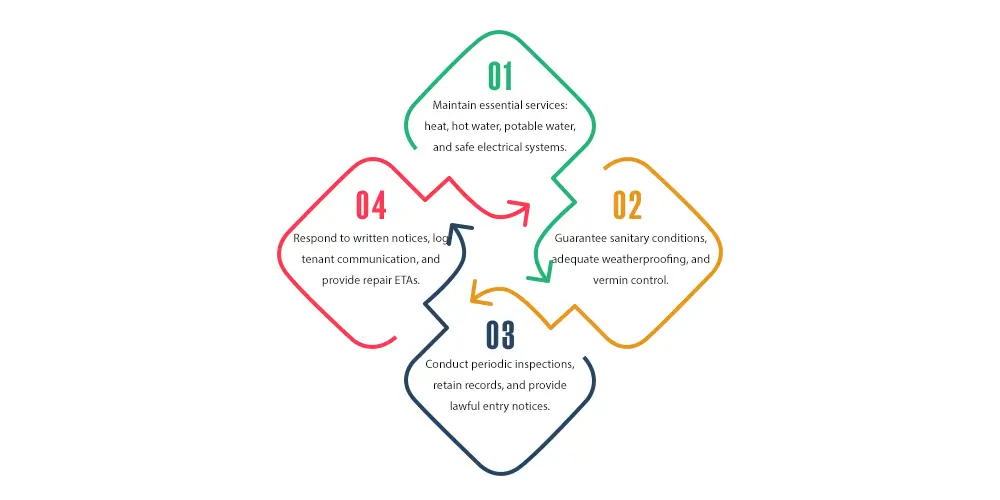
Noncompliance risks rent abatement, repair-and-deduct, code enforcement, or damages.
Screening Tenants and Fair Housing Rules
Because tenant selection implicates federal, state, and local civil rights laws, we design screening procedures that are objective, uniformly applied, and narrowly tailored to legitimate business criteria. We disclose our rental application process in writing, collect only necessary data, and obtain consent for tenant background checks. We evaluate credit, rental history, income verification, and lawful criminal history factors using standardized thresholds. We never make decisions based on protected characteristics under discrimination laws, including race, color, religion, sex, national origin, disability, familial status, or other jurisdiction-specific classes.
We document criteria, adverse action reasons, and required notices. We provide reasonable accommodations and consider individualized assessments where statutes or guidance require them. We train staff, audit files, and correct deviations. Consistency, transparency, and recordkeeping mitigate risk and promote equitable access.
Security Deposits and Move-In/Move-Out
Having set fair, consistent screening standards, we also safeguard funds and property condition through clear security deposit and move-in/move-out procedures. We collect deposits in compliance with security deposit regulations, disclose escrow details, and issue written receipts. We document condition at delivery and surrender to minimize disputes and guarantee traceability.
We protect deposits and property with compliant collection, clear disclosures, and documented move-in/move-out condition.
- We conduct move in inspections using a detailed checklist, timestamped photos, and tenant acknowledgments.
- We define allowable uses of the deposit unpaid rent, excessive damage, and remediation—excluding ordinary wear and tear.
- We apply move out procedures that require advance notice, access for a pre-departure walkthrough, and final meter readings.
- We settle accounts within statutory time frames, providing an itemized statement, invoices, and any balance refund via traceable payment.
Accurate records protect both parties.
Rights, Obligations, and Legal Compliance
While rental operations can be flexible, our legal duties aren’t. We must comply with statutes, ordinances, and lease covenants that govern habitability, disclosures, and tenant rights. We’re entitled to timely rent, quiet enjoyment of the premises for lawful purposes, and access for repairs with proper notice. We must maintain building and safety standards, remediate hazards, and respect anti-discrimination laws.
We’re obligated to collect and remit property taxes, satisfy insurance requirements, and observe local licensing or registration rules. We must provide written notices for entry, rent increases, and termination, and follow due process for eviction. We must safeguard personal data, handle repairs within statutory timelines, and document communications. Noncompliance risks penalties, rent abatement, injunctions, or civil liability. Compliance preserves revenue and minimizes litigation exposure.
Working With Property Managers and Vendors
Even if we self-manage, selecting and supervising competent property managers and vendors is a core fiduciary function. We define scope, delegate authority, and memorialize duties in written agreements. Effective property management requires compliance controls, insurance verification, and auditable records. We align maintenance schedules with statutory habitability standards and budget constraints. Strong vendor relationships reduce downtime, control costs, and mitigate risk.
Fiduciary stewardship demands rigorous vendor oversight, compliance controls, auditable records, and habitability-aligned maintenance.
- Require written contracts with indemnity, warranties, service levels, and termination for cause; verify licensing, bonding, and workers’ compensation.
- Establish procurement protocols: competitive bids, conflict-of-interest disclosures, and approval thresholds.
- Implement preventive maintenance schedules, response time metrics, and documented inspections to guarantee continuity of service.
- Use accounting segregation: purchase orders, invoice matching, lien waivers, and retainage where permissible.
We monitor performance through KPIs, review logs, and periodic audits, adjusting scope promptly when vendors underperform.
Resolving Disputes and Handling Evictions
Disputes arise, and we resolve them through structured, documented processes that preserve rights and minimize liability. We begin dispute resolution by identifying the issue, citing lease provisions, and issuing written notices with cure periods. We memorialize communications, maintain evidentiary records, and propose mediation when appropriate. If noncompliance persists, we commence the eviction process consistent with jurisdictional law: serve proper notice, file an unlawful detainer or summary proceeding, and obtain a court judgment before repossession.
We respect tenant rights at every stage habitability, due process, anti-retaliation, and fair housing. We avoid self-help actions, improper lockouts, or utility shutoffs. We calculate rent demands accurately, credit payments, and assess fees only if authorized. After judgment, we coordinate with law enforcement for execution and manage security deposits per statute.
Frequently Asked Questions
How Do Landlords Handle Natural Disasters or Declared Emergencies?
We activate emergency preparedness plans, notify you under tenant communication strategies, and conduct property damage assessment. We coordinate repairs, document losses, comply with local orders, manage habitability obligations, arrange temporary accommodations if required, and pursue insurance claims and mitigation to restore premises.
Can Landlords Use Smart Home Devices to Monitor Properties?
Yes, we can, but only within legal constraints. We must respect tenant privacy, follow monitoring regulations, obtain informed consent, disclose device functions, limit data collection, secure storage, and avoid surveillance in private areas. Smart device ethics govern deployment and enforcement.
What Insurance Policies Should Landlords Personally Carry?
We should carry landlord liability, property insurance, and umbrella coverage; require tenant coverage. Add loss-of-rents, building ordinance, and equipment breakdown endorsements. Consider flood and earthquake policies. Maintain workers’ compensation if we hire labor. Review exclusions, limits, deductibles, and additional insureds.
How Do Landlords Report Rental Income for Taxes?
We report rental income on Schedule E, attach it to Form 1040, and maintain contemporaneous records. We claim tax deductions for allowable expenses and depreciation. We comply with reporting requirements, including 1099 issuance, passive activity rules, and net investment income tax.
What Apps or Software Do Landlords Use to Manage Rentals?
We use Property management software like AppFolio, Buildium, and DoorLoop. For Rental payment platforms, we deploy Zillow, PayRent, or Cozy. Tenant communication tools include Hemlane and Avail. These systems streamline screening, leases, maintenance requests, accounting, and compliance.
Conclusion
In sum, we’ve defined a landlord’s legal status, revenue model, and operational duties. We manage acquisitions and financing, draft enforceable leases, lawfully handle security deposits, and execute move-in/move-out protocols. We comply with habitability standards, fair housing laws, and notice requirements. We coordinate property managers and vendors under clear contracts. When disputes arise, we pursue mitigation, documentation, and due process, including lawful eviction. By adhering to statutory obligations and best practices, we protect assets, tenants’ rights, and long-term property value.