If your consumer unit is damaged, outdated, or no longer meets current safety standards, replacing it is often the safest and most practical solution. In London, consumer unit replacement is commonly required where we find heat damage, frequent tripping, old rewireable fuses, missing RCD protection, poor earthing or bonding, moisture ingress, or failed test results during inspection.
A modern consumer unit helps improve electrical safety, supports compliance with BS 7671 and Part P, and gives clearer, more reliable circuit protection. Replacement work normally includes inspection, installation, testing, certification and notification where required. In most London properties, the work can usually be completed within 4 to 8 hours, depending on the size and condition of th
Key Takeaways
- Replace a consumer unit if there are signs of heat damage, scorching, brittle plastic, moisture ingress, or repeated nuisance tripping.
- Older fuse boards with rewireable fuses or no RCD protection often fall short of current wiring standards.
- A replacement may also be needed when adding EV chargers, heat pumps, extensions or other higher-demand circuits.
- Consumer unit upgrades often involve improved earthing, bonding, labelling and circuit protection.
- Replacement work should be carried out by a properly qualified electrician who can inspect, test, certify and notify the work where required.
Table of Contents
Signs Your Consumer Unit Needs Replacing
A consumer unit can often show clear warning signs before it fully fails. Common issues include scorching, heat damage, discolouration, brittle casing, loose terminations, missing labels, corrosion, or evidence of moisture. Frequent tripping under normal use can also point to an ageing or unsuitable board.
Older installations with rewireable fuses, poor circuit separation, or no RCD protection are often no longer suitable for the demands of a modern property. If protective devices do not reset properly, the busbar is corroded, or different breaker brands have been mixed together, reliability and safety can both be affected.
In some cases, we also find asbestos-backed boards or older wooden enclosures, which usually need replacing for safety reasons. A new consumer unit can provide improved fault protection, better circuit identification, reduced nuisance tripping and a more robust overall installation.
Consumer Unit Replacement and BS 7671 Compliance
Consumer unit replacement in London must be carried out in line with current wiring regulations and Building Regulations requirements. We assess whether the existing arrangement meets BS 7671, whether the enclosure is suitable, and whether the main earthing and bonding are up to standard.
We also carry out inspection and testing to confirm disconnection times, fault current values, circuit identification and the suitability of protective devices. Where problems are found, these must be addressed so the installation can be left in a safe and compliant condition.
Once the work is complete, the correct certification is issued, and notifiable work is registered where required under Part P. This gives you formal evidence that the installation has been replaced and tested correctly.
RCD, RCBO and Surge Protection in Modern Consumer Units
Modern consumer units are designed to provide much better protection than older fuse boards. In many cases, this includes RCDs, RCBOs and surge protection devices.
RCDs are used to disconnect the supply quickly in the event of earth leakage, helping reduce the risk of electric shock and electrical fire. RCBOs provide both overcurrent and residual current protection on individual circuits, which improves fault isolation and reduces the chance of one problem affecting the whole property.
Where required, surge protection devices can also be fitted to help protect boilers, appliances, electronic equipment and other sensitive systems from transient overvoltages. This is particularly useful in properties with modern equipment and higher electrical demand.
Metal Consumer Units and Fire Safety
Current standards require consumer units in domestic premises to have non-combustible enclosures. In practice, this means modern metal-clad boards are used instead of older plastic units.
A properly installed metal consumer unit helps improve fire safety, supports compliance with current regulations, and gives a more durable and reliable enclosure for protective devices. Secure cable entries, proper terminations, correct labelling and suitable clearances all form part of a safe installation.
This is especially important in London properties where boards are often located in hallways, cupboards, risers or other access points that need careful planning and neat installation.
Replacing Old Fuse Boards and Rewireable Units
Many older London properties still have fuse boards with rewireable fuses. Although these systems may still operate, they do not provide the same level of protection, reliability or convenience as a modern consumer unit.
Common issues include incorrect fuse ratings, worn fuse carriers, slow fault clearance, lack of RCD protection, poor labelling and signs of thermal stress. These boards are also more difficult to test, maintain and fault-find.
Replacing an old fuse board with a modern metal consumer unit provides improved protection, clearer circuit control, better testing outcomes and a safer overall installation.
When Added Loads Mean a Consumer Unit Upgrade Is Needed
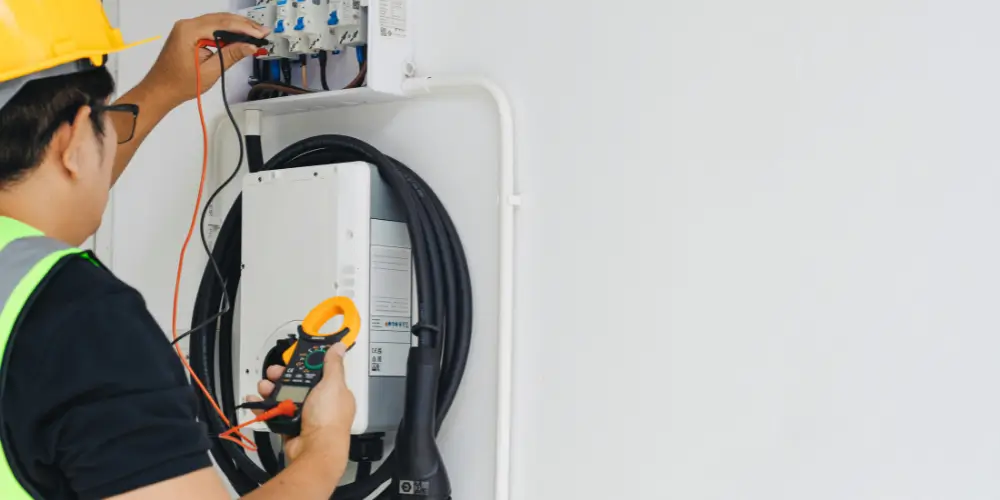
A consumer unit that was acceptable years ago may no longer be suitable once new electrical loads are added. EV chargers, heat pumps, extensions, garden rooms, home offices and modern appliances all place more demand on the installation.
In these cases, we assess whether the existing board has enough spare capacity, whether the main switch and tails are suitable, and whether the protective devices match the new load requirements. If not, a consumer unit replacement may be necessary to support the updated installation safely and correctly.
Consumer Unit Replacement for Landlords and HMOs
For landlords and HMO properties in London, consumer unit replacement is not just about convenience. It is often directly connected to electrical safety responsibilities, tenancy compliance and EICR outcomes.
Where a rental property has an outdated board, missing RCD protection, poor labelling, inadequate bonding or other safety defects, replacement may be required to bring the installation up to a satisfactory standard. In HMOs and rental properties, documentation, testing and clear circuit schedules are especially important.
A compliant consumer unit helps landlords maintain a safer installation, reduce avoidable failures, and support the paperwork expected during inspections, tenancy changes and property management.
What an EICR Can Reveal About the Consumer Unit
An EICR will often show whether a consumer unit is still suitable or whether replacement should be recommended. During inspection and testing, we assess the enclosure, protective devices, circuit arrangement, earthing, bonding and overall safety of the board.
Typical issues include no RCD protection where it should be present, damaged components, overloaded ways, poor identification, mixed devices, borrowed neutrals and signs of overheating. Where these issues are serious enough, replacement may be the most appropriate and cost-effective solution.
A new consumer unit is often recommended after EICR findings where the existing board cannot be reasonably upgraded or where the overall condition is no longer acceptable.
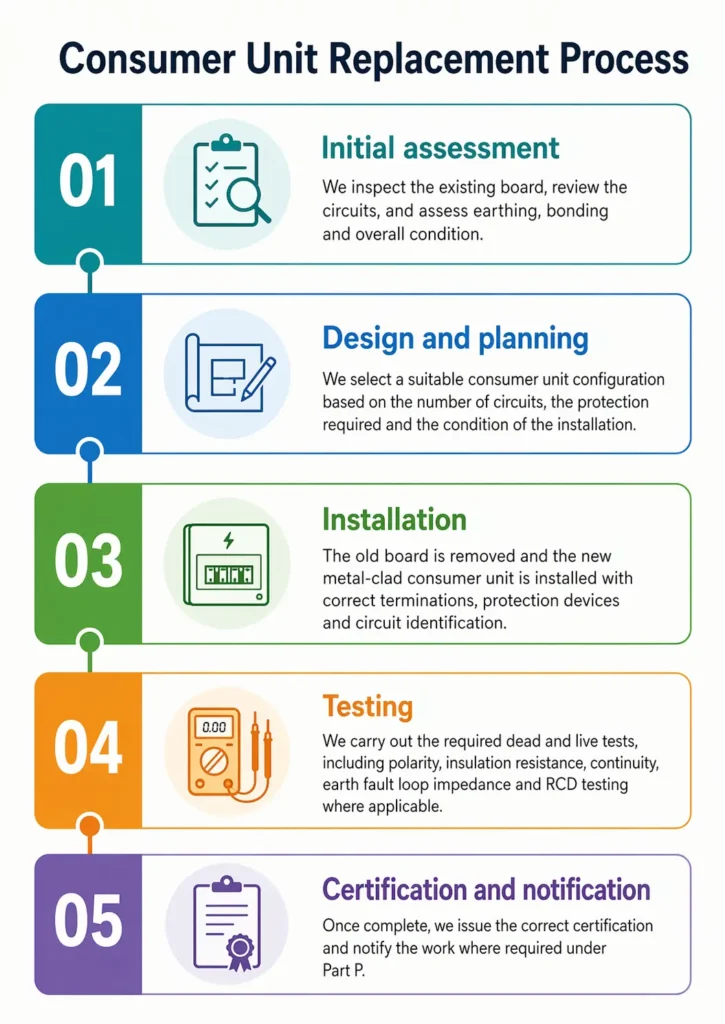
Our Consumer Unit Replacement Process
We follow a structured process to make sure the replacement is completed safely and correctly.
Consumer Unit Replacement Cost and Timescale in London
The cost of consumer unit replacement in London depends on several factors, including the number of circuits, the type of board required, whether RCBO protection is being used, whether surge protection is needed, and whether any additional remedial work is required.
Access can also affect the job. Tight cupboards, shared hallways, older meter positions, asbestos concerns, restricted access and poor condition of existing wiring can all increase the time involved.
In many cases, installation takes around 4 to 8 hours on site, although larger houses and more complex installations may take longer. A survey is often the best way to confirm the exact scope and pricing before work begins.

Certification, Part P and Handover Documents
Consumer unit replacement is not just about fitting a new board. The work must also be properly tested and documented.
After installation, the correct certification is issued, including details of the circuits, test results and protective devices. Where the work is notifiable, it must also be registered under Part P so the property owner receives the relevant Building Regulations compliance documentation.
This paperwork is important for landlords, homeowners, insurers and anyone selling or purchasing a property.
Choosing the Right Electrician for Consumer Unit Replacement
Consumer unit replacement should always be carried out by a properly qualified electrician with the right competence, testing equipment and certification process in place.
It is important to choose someone who can inspect the existing installation properly, identify any issues with bonding or circuit design, complete the replacement safely, carry out full testing and provide the required certification and notification. This is essential for both compliance and long-term electrical safety.
| Scheme/Status | What We Verify | Why It Matters |
| NICEIC Approved | Scope, insurance, audit date | Demonstrates robust periodic assessment |
| NAPIT Registered | Competence, MCS/EAS links | Confirms multi-discipline compliance |
| CPS Listing | Part P self-certify | Enables legal notification |
| Test Instruments | Calibration certificates | Guarantees measurement accuracy |
| EIC/EICR Output | Sample reports | Confirms code-compliant deliverables |
We also validate ID against the CPS register, request job-specific risk assessments, and insist on RCD/AFDD knowledge where applicable. This keeps installations safe and compliant.
Frequently Asked Questions
How do I know if my consumer unit needs replacing?
Signs include heat damage, brittle or discoloured casing, repeated tripping, rewireable fuses, no RCD protection, missing labels, corrosion or failed EICR findings.
Can an old fuse box be repaired instead of replaced?
In some cases, minor issues can be addressed, but many old fuse boards are better replaced altogether because they do not meet modern safety expectations and are difficult to upgrade properly.
How long does consumer unit replacement take?
In a typical London flat or house, the work often takes between 4 and 8 hours. More complex properties or installations needing additional remedial work may take longer.
Will the power be off during the work?
Yes. The power will usually need to be isolated while the old board is removed, the new unit is installed, and the system is tested.
Do I get a certificate after the work?
Yes. Once the replacement is complete and tested, the correct certification is issued. Where the work is notifiable, it should also be registered under Part P.
Is consumer unit replacement important for landlords?
Yes. If an existing board is outdated, unsafe or fails inspection standards, replacement may be required to help bring the property to a satisfactory electrical safety standard.
Consumer Unit Replacement London
If your existing board is outdated, damaged, or no longer compliant, consumer unit replacement is often the right next step. A properly installed modern consumer unit improves safety, supports compliance, and gives clearer, more reliable protection for the whole installation.
For London properties, the key is not just fitting a new board, but making sure the installation is