A landlord can use letting agents to handle inspections, certificates and repairs while retaining legal responsibility for safety. The landlord stays in control by choosing a safety‑focused agent, setting clear contractual duties for gas, electrical and fire checks, and requiring transparent reporting and shared access to records. Regular reviews of certificates, response times and tenant reports help spot gaps early. With simple systems and checklists, landlords can keep agents efficient and compliance firmly under control, as the next sections explain.
Key Takeaways
- Specify in writing which safety tasks the agent handles (gas checks, EICRs, alarms, fire doors) while you retain legal responsibility as landlord.
- Choose agents who demonstrate systematic safety management: documented procedures, staff training, clear reporting, and evidence of past compliance.
- Build contracts that reference current safety laws, set spending limits for urgent works, and require competent, qualified contractors with verifiable records.
- Require shared digital logs of certificates, inspection dates, and remedial actions, and review them regularly to avoid missed renewals.
- Monitor the agent’s performance by checking response times, accuracy of records, and how quickly they act on tenant safety concerns.
Table of Contents
Understanding Your Legal Responsibilities as a Landlord
Although letting agents often manage day-to-day tasks, the landlord retains ultimate legal responsibility for ensuring the property is safe, compliant, and properly managed. Letting agents can manage tasks, but legal responsibility for safety and compliance always stays with the landlord In law, a letting agent cannot absorb or replace that duty. The landlord is the “duty holder” that regulators, insurers, and courts will look to if something goes wrong.
Understanding this creates a shared foundation with any agent. A landlord must know which safety standards apply, keep key records, and be able to show informed oversight of the home. Delegating checks or administration never removes accountability. Within a community of responsible landlords, the norm is to stay informed, ask for evidence, and review what others often leave unquestioned, so both tenants and agents can rely on clear, confident leadership.
What Letting Agents Typically Do – and Don’t Do – on Safety
When a landlord appoints a letting agent, the agent usually takes on practical safety tasks such as arranging gas and electrical inspections, commissioning smoke and carbon monoxide alarms, and coordinating remedial works with contractors. They may schedule Legionella checks, chase certificates, keep basic records, and relay safety updates to landlords and tenants so everyone feels informed and included.
However, most agents do not assume ultimate legal responsibility for safety compliance; that remains with the landlord. They typically do not carry out risk assessments themselves, verify contractors’ work in depth, or monitor day‑to‑day hazards inside the property between visits. Many agents also do not proactively review changing regulations unless prompted. In practice, they implement agreed safety actions rather than design or own the safety strategy.

Choosing the Right Letting Agent With Safety in Mind
Selecting a letting agent with safety in mind means evaluating far more than fees and marketing promises; it requires examining how systematically the agent manages compliance, communicates risks, and responds to hazards. Owners who value a shared commitment to safe homes look for agents who treat safety as routine practice, not an add‑on.Owners who prioritise safe homes choose agents who weave safety into everyday practice, not occasional promises
They can compare agents by asking for evidence rather than assurances, and by noticing whether the agent talks about safety in inclusive, plain language that welcomes questions.
Key signs of a safety‑focused letting agent include:
- Clear written safety procedures for inspections and repairs
- Proven track record of passing audits and enforcing legal checks
- Transparent reporting of issues, with realistic timeframes
- Respectful engagement with tenants’ safety concerns
- Regular training for staff on current regulations and best practice
Structuring Management Agreements to Protect Safety
Even a conscientious, safety‑minded agent can only do so much if the management agreement is vague or poorly drafted. To protect safety while preserving a sense of shared purpose, landlords are best served by treating the agreement as a practical safety framework, not a generic template. It should reference current legislation, required inspections, and access rights for essential checks, without sliding into day‑to‑day task lists.
Clear clauses on authority to act in urgent situations, limits on spending, and when landlord approval is needed help everyone feel secure and aligned. The document can also require the agent to use competent contractors and keep verifiable records of safety‑related work, so both landlord and agent can show they have played their part responsibly.
Setting Clear Safety Roles and Responsibilities
Clear safety outcomes depend on accurately defining who holds which legal duties. This section explains how statutory obligations are allocated between letting agents and landlords, and what must be written into contracts to reflect that split. It also considers how to prevent gaps or overlaps in responsibility that could leave tenants at risk and both parties exposed.
Defining Legal Safety Duties
Although safety may sound like a diffuse organizational value, legal systems typically translate it into concrete duties assigned to specific actors, roles, and entities. In the letting context, these duties are not abstract ideals; they are enforceable standards that shape everyday decisions, documents, and conversations. By defining legal safety duties clearly, a landlord and letting agent can act as a coordinated team rather than disconnected individuals.
Typical legal duties include:
- Maintaining the property so key structures and systems remain safe and sound
- Ensuring gas, electrical, and fire protections are inspected and certified as required
- Keeping accessible records that evidence checks, works, and communications
- Responding promptly and proportionately to reported hazards or incidents
- Embedding safety expectations into written agreements, policies, and routines
Agent Versus Landlord Responsibilities
Distinguishing what belongs to the landlord and what belongs to the agent is the starting point for reliable safety management. A written management agreement should specify who arranges gas checks, electrical testing, fire precautions, and ongoing repairs, so no one assumes the other has acted.
Clear allocation of tasks helps every party feel part of a coordinated effort rather than exposed or sidelined. The landlord typically retains ultimate legal responsibility, even when delegating daily safety duties to the agent. Consequently, the agreement should include reporting timescales, approval limits for urgent works, document storage, and how access to the property is gained.
Regular reviews and shared records create transparency, so landlord, agent, and tenants understand how they each contribute to a safe, well‑cared‑for home.
Gas Safety: Who Books, Who Pays, Who Follows Up
Gas safety management hinges on clear agreement about who books inspections, who pays for them, and who monitors ongoing compliance. This section outlines how letting agents and landlords can allocate booking responsibilities so inspections occur on time and without confusion. It also considers practical approaches to cost allocation and tracking certificates so legal obligations are consistently met.
Booking Responsibilities Clarified
When gas safety responsibilities are split between landlord and agent, confusion most often arises over three practical questions: who books the inspection, who pays for it, and who must chase completion and paperwork. Clarity comes from making booking duties explicit in the management agreement and then repeating them in everyday communication. Everyone involved should know, without hesitation, who presses “go” on each annual check.
To feel part of the same team, both sides benefit from agreeing:
- Who selects the Gas Safe engineer and approves their credentials
- How far in advance the inspection is booked before certificate expiry
- Who coordinates access with the tenant and handles missed appointments
- Who receives the certificate first and how it is shared onward
- How changes to booking arrangements are confirmed in writing
Costs and Compliance Tracking
Clear cost allocation and reliable compliance tracking sit at the centre of safe gas management between landlords and letting agents. A written management agreement should specify who pays for gas safety checks, what fee structure applies, and how invoices are authorised. Many landlords prefer agents to pay contractors, then recharge costs with clearly labelled statements so nobody feels exposed or excluded.
Equally important is a shared system for tracking compliance dates. Agents may maintain a digital register of certificates, expiry dates, and engineer details, with reminders set well in advance. Landlords gain confidence when they receive scheduled updates and copies of documents. This joint visibility builds trust, reduces last‑minute panic, and helps everyone feel part of a competent, safety‑focused team.
Electrical Safety and Ongoing Maintenance Controls
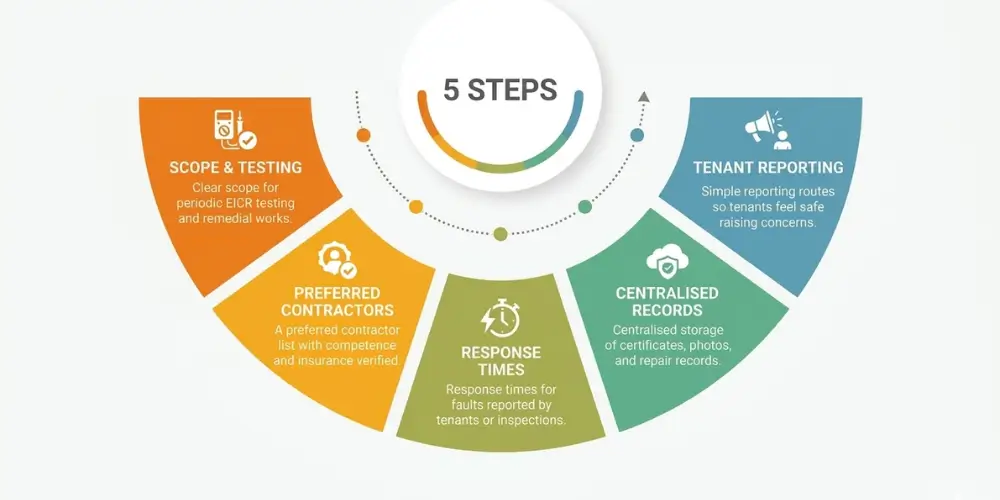
Electrical systems within a let property present persistent risks that must be managed through structured safety and maintenance controls. When working with letting agents, owners retain responsibility but can share practical tasks through clear instructions and evidence-based processes.
Regular inspection, testing, and prompt repair create a culture where everyone involved feels protected and respected.
Landlords typically keep control by agreeing written procedures with agents, including:
Such controls help guarantee consistent standards, even as personnel change.
Fire Safety, Alarms, and Building Compliance Checks
Although individual properties vary, fire safety in let homes relies on systematic checks, well‑maintained alarms, and documented compliance with legal standards. A responsible landlord expects their letting agent to organise regular testing of smoke and heat alarms, confirm adequate coverage on each floor, and guarantee alarms are interlinked where regulations require it.
Agents also play a key role in coordinating fire‑risk assessments for communal areas, checking escape routes remain clear, and verifying that doors, emergency lighting, and signage meet building and housing standards. Agents coordinate communal fire‑risk checks, keeping escape routes clear and safety doors, lighting, and signage fully compliant
In HMOs and larger blocks, this commonly extends to routine inspections of fire doors, closers, and intumescent strips. Clear expectations help everyone feel they are contributing to a safe, well‑looked‑after living community.
Keeping Records, Certificates, and Audit Trails in Order
Effective safety management for letting agents depends on centralised document storage, where gas certificates, electrical reports, and inspection records are held in one accessible, secure location. When these records are structured into audit-ready compliance logs, agents can quickly demonstrate that legal duties have been met and key dates have been tracked. This organised approach reduces the risk of missed renewals, disputed responsibilities, and enforcement action.
Centralised Document Storage
Centralised document storage underpins safe and compliant operation by ensuring that all critical records schematics, method statements, test certificates, permits, and audit logs are maintained in a single, authoritative system. When landlords and letting agents share this space, everyone can see what is current, what is missing, and what needs attention next. It becomes easier to act as one coordinated safety team, rather than as scattered individuals.
A well‑structured repository typically includes:
- Clear folders for each property, contractor, and system.
- Version control so only the latest approved documents are used.
- Role‑based access, giving agents what they need without losing landlord oversight.
- Expiry alerts for certificates that must be renewed on time.
- Simple export options for sharing evidence with insurers or regulators.
Audit-Ready Compliance Logs
Many of the disputes, fines, and delays in lettings arise not from missing safety work, but from missing proof that it was done correctly and on time. Audit-ready compliance logs give landlords and agents a shared structure for that proof.
A simple framework records what was done, where, when, by whom, and with which certificate or report attached. Each gas check, EICR, alarm test, or legionella review is logged with dates, outcomes, and follow-up actions.
Letting agents can maintain these logs day to day, while landlords retain oversight through regular summaries and spot checks. When everyone works to the same log, renewals are not forgotten, evidence is easy to present, and the whole team stands together during inspections or disputes.
Monitoring Your Agent’s Performance and Spotting Gaps
Monitoring an AI agent’s performance starts with treating it like any other operational system: observe, measure, and compare outcomes against expectations. Monitor AI agents like any operational system: observe, measure, and continually compare outcomes against clear expectations
In the same way, a landlord monitoring a letting agent’s safety work looks for patterns, not isolated mistakes. They understand that clear visibility builds trust and a sense of shared responsibility. They track how reliably the agent turns compliance plans into real-world action, and how honestly issues are reported. Gaps are usually revealed by inconsistencies between what is promised and what actually happens.
- Record safety tasks the agent claims to complete
- Cross-check dates with certificates and inspection reports
- Note repeated delays or last-minute rush jobs
- Compare different properties managed by the same agent
- Watch how quickly concerns are acknowledged and explained
Practical Checklists and Systems to Stay in Control
A simple, repeatable system keeps a landlord in control without needing to micromanage every inspection or certificate. They start with a master safety checklist: gas, electrical, alarms, fire doors, legionella, emergency lighting, and furniture compliance. Each item is given a renewal date, responsible person (agent or landlord), and evidence required.
Landlords then build a simple calendar system, digital or paper, that flags tasks 60 and 30 days before expiry. Copies of certificates and reports are stored in shared folders so both landlord and agent see the same information. Routine property visits follow a standard template, checking alarms, escape routes, and tenant concerns. After every visit or certificate renewal, the checklist is updated, keeping everyone aligned and accountable.
Frequently Asked Questions
How Do I Terminate an Agent’s Contract if They Neglect Safety Responsibilities?
They should follow the contract’s termination clause, documenting safety breaches, giving written notice, and setting a clear end date. Seeking legal advice and sharing plans with tenants supports a safe, respectful changeover to a more accountable management arrangement.
What Insurance Should I Hold if My Agent Manages Day-To-Day Safety?
They should hold landlord building, contents, and public liability insurance, plus legal expenses cover. Even with an agent managing safety, insurance in the landlord’s name preserves protection, shared responsibility, and a sense of security within their rental community.
How Can I Educate Tenants About Safety Without Undermining the Agent?
They share safety guidance through friendly welcome packs, joint landlord–agent emails, and occasional group check‑ins. By praising the agent’s role, inviting feedback, and framing safety as a shared community value, they support tenants without weakening the agent’s authority.
What Should I Do if My Agent and Contractor Give Conflicting Safety Advice?
They should seek an independent, competent safety opinion, then calmly share that report with both agent and contractor. This shared reference point helps align everyone, protect tenants, and maintain a respectful, collaborative relationship across the whole renting team.
How Often Should I Personally Inspect Properties to Verify Safety Standards?
They might inspect at least once or twice a year, aligning with legal checks, plus after major works or incidents. Regular visits, shared checklists, and open conversations with tenants help everyone feel included in maintaining a safe home.
Conclusion
In conclusion, effective collaboration with letting agents need not mean surrendering control of safety. By understanding legal responsibilities, carefully selecting agents, and structuring clear management agreements, landlords can guarantee that safety tasks are properly handled and evidenced. Robust record‑keeping, regular performance monitoring, and use of practical checklists allow landlords to verify compliance, close gaps quickly, and protect both tenants and their investment while maintaining lawful, accountable control over all safety matters.