Reducing tenant turnover with clear maintenance standards starts by defining what “good condition” means for units and common areas, then consistently meeting that bar. Owners set tiered response times for emergencies, urgent issues, and routine repairs, and communicate progress through transparent workflows and portals. Proactive inspections and preventive work show care before problems arise. Training staff, tracking KPIs, and acting on feedback tie daily maintenance to resident trust, and the next steps explain how to put this into practice.
Key Takeaways
- Define and publish clear maintenance standards so residents know what “good condition” means for units, systems, and shared spaces.
- Set and consistently meet response-time tiers (emergency, urgent, routine) so all residents experience fair, predictable service.
- Use transparent workflows with trackable requests, status updates, and two-way communication to reduce uncertainty and frustration.
- Implement proactive inspections and preventive maintenance to avoid disruptive failures and show long-term commitment to residents’ comfort and safety.
- Train staff on communication, timelines, and quality checks, and measure results with KPIs and feedback to continuously improve service.
Table of Contents
Defining Clear Maintenance Standards That Residents Can Rely On
Consistently defined maintenance standards give residents a clear understanding of what to expect and when to expect it. When a property documents standards for cleanliness, safety, and upkeep, residents see that everyone is held to the same commitments. This shared framework helps people feel they are part of a well‑cared‑for community, not just renting a unit.
Clear standards describe what “good condition” means for common areas, landscaping, building systems, and in‑home features. They outline how issues are identified, prioritized, and tracked from report to resolution without leaving residents guessing. Visible tools, such as written guidelines, resident handbooks, and online portals, reinforce those expectations. Over time, dependable standards build trust, reduce friction, and create a sense that residents and management are working together.
Setting Response Time Expectations for Different Types of Requests
When residents know how quickly different types of issues will be addressed, anxiety and repeat follow‑ups decline. Clear response time expectations turn vague promises into predictable care, signaling that everyone’s comfort matters. Thoughtful operators group requests into tiers: emergency, urgent, and routine. Clear response expectations transform uncertainty into predictable care, reducing anxiety and reassuring residents their comfort truly matters
- Emergency items such as active leaks, loss of heat in winter, or safety risks might carry a commitment like “response within two hours.”
- Urgent concerns, including broken appliances or partial power loss, may receive a “same‑day or next‑day” standard.
- Routine requestsminor cosmetic issues or non‑essential repairs often follow a “within 5–7 days” guideline.
- Publishing these timeframes, and applying them consistently across the community, assures residents they share a common standard and will be treated fairly.

Building Transparent Maintenance Workflows and Communication Channels
Clear timelines only work if residents can see how their requests move from submission to completion.
Transparent workflows help residents feel included, rather than left wondering what is happening behind the scenes.
A clear, shared process signals that everyone in the community plays by the same rules.
Property teams strengthen trust by organizing maintenance around simple, visible steps:
- Standardized request routes Residents always know where to submit, what details to include, and what confirmation they will receive.
- Trackable status updates Portals, emails, or texts show stages such as “received,” “scheduled,” and “completed,” reducing anxiety and uncertainty.
- Consistent two-way channels Defined methods for questions, photos, and follow‑up allow residents and staff to resolve issues together, not in isolation.
Using Proactive and Preventive Maintenance to Show You Care
In addition to responding quickly to repair requests, proactive and preventive maintenance demonstrates that a property team values residents’ comfort and safety before problems surface. Regular inspections of HVAC systems, plumbing, roofing, and common areas signal that residents’ daily routines matter and that disruptions should be rare, not expected.
A clear preventive schedule filter changes, safety checks, seasonal preparations helps residents feel they are living in a well‑cared‑for community rather than just occupying a unit. When property teams share what they are checking and why, residents see that care is intentional, not reactive.
This approach reduces surprise breakdowns, but just as importantly, it builds trust. Residents interpret consistent upkeep as proof that their long‑term presence in the community is genuinely wanted.
Training Your Team and Measuring Results to Reduce Turnover
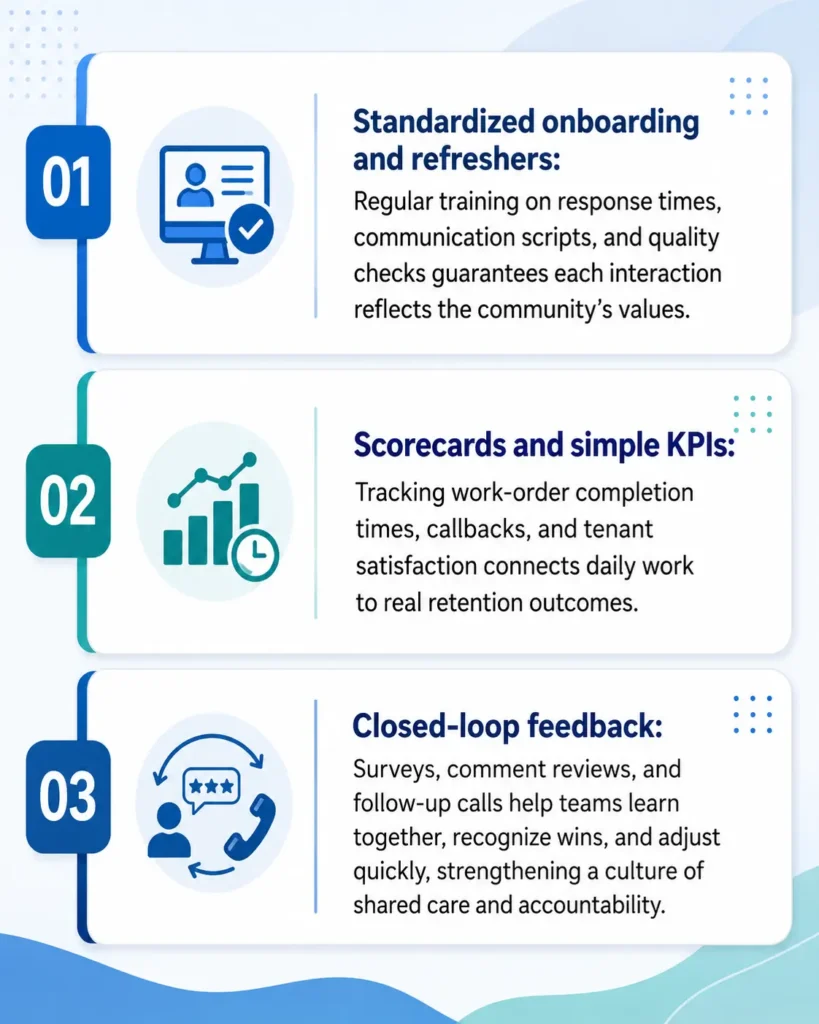
Equiping onsite teams with the right training and feedback loops turns retention strategies from ideas into consistent daily behaviors. Management sets the tone by showing that everyone, from maintenance techs to office staff, shares responsibility for residents feeling seen, safe, and valued.
A clear structure helps teams act with confidence and unity:
Frequently Asked Questions
How Can Clear Maintenance Standards Be Highlighted in Property Marketing to Attract New Tenants?
Clear maintenance standards are highlighted through detailed listings, transparent response timelines, and showcased inspection routines. Prospects feel welcomed when marketing emphasizes dependable care, well-kept communal spaces, and open communication, signaling a community where everyone’s comfort, safety, and home pride truly matter.
What Maintenance Responsibilities Should Be Clarified in the Lease Versus a Separate Handbook?
Core, enforceable maintenance duties, costs, and response times belong in the lease; flexible how‑to guidance, seasonal checklists, community expectations, and detailed reporting procedures fit better in a friendly handbook that supports shared care of the home.
How Do Maintenance Standards Differ for Short‑Term Versus Long‑Term Residential Leases?
Maintenance standards differ because short‑term leases prioritize frequent cleaning, rapid turnaround, and furnished‑unit upkeep, while long‑term leases emphasize shared responsibility, preventative maintenance schedules, clearer repair timelines, and collaborative communication so residents feel secure, respected, and invested in their home.
Can Clear Maintenance Standards Help Justify Rent Increases or Premium Pricing?
Yes. Clear maintenance standards can support premium pricing by showing residents they are genuinely cared for. When people trust consistent upkeep and swift repairs, they feel secure, valued, and more willing to invest in staying long‑term.
How Should Maintenance Standards Adjust for Older Versus Newly Constructed Properties?
Maintenance standards should honor each building’s age while delivering equal care: older properties need proactive inspections, system upgrades, and cosmetic refreshes; new construction demands meticulous warranty follow‑through, rapid punch‑list fixes, and consistent upkeep that protects a shared sense of pride.
Conclusion
By committing to clear maintenance standards, defined response times, and transparent workflows, property managers demonstrate reliability residents can see and feel. Proactive, preventive care reinforces that commitment, reducing frustrations before they grow. When teams are trained to these standards and performance is measured consistently, maintenance becomes a strategic advantage rather than a cost center. In turn, residents gain confidence, remain longer, and turnover declines—strengthening both community stability and the property’s bottom line.