London landlords must guarantee gas, electrical, fire and energy safety across tenancies. They arrange annual gas checks by Gas Safe engineers and keep CP12 certificates. They obtain EICRs at the required intervals, promptly fix C1/C2 faults, install smoke and CO alarms, and conduct fire risk assessments, including clear escape routes. EPCs must meet MEES rating requirements, and licences must be applied for where borough rules dictate. Records and vetted contractors are kept to show compliance; more detail follows for each duty.
Key Takeaways
- Landlords must ensure gas safety with annual Gas Safe checks and provide tenants with a CP12 certificate within 28 days or before move-in.
- Obtain an EICR every five years or at tenancy change, promptly fix C1/C2 faults, and keep reports for records.
- Install and test smoke, heat, and CO alarms, maintain clear escape routes, and complete a documented fire risk assessment.
- Provide and retain valid EPCs (minimum rating E), comply with HMO or local licensing, and display compliance when required.
- Vet qualified contractors (Gas Safe, NICEIC, accredited asbestos surveyors), log inspections, repairs, and certificates to demonstrate due diligence.
Table of Contents
What London Landlords Must Do: Responsibilities And Who’s Liable
When letting property in London, the landlord bears primary responsibility for ensuring safety standards are met and maintained; this includes complying with statutory duties such as gas safety checks, electrical inspections, fire safety measures, and providing a valid Energy Performance Certificate. The landlord must identify hazards, arrange compliant works, keep records, and communicate obligations to tenants. Where a managing agent or contractor is engaged, statutory liability typically remains with the landlord unless a formal transfer of responsibility is established; agents have contractual duties but do not automatically assume legal liability. Tenants also share duties: they must use fixtures safely, report defects promptly, and allow access for inspections and repairs. Local authorities enforce standards and can impose penalties or remedial notices on landlords. Insurance and tenancy agreements should reflect compliance arrangements. Clear task allocation, documented evidence, and proactive maintenance protect the liberty of both landlord and tenant by minimizing enforcement risk and preserving the right to occupy safely.
Gas Safety Checks, Certificates, and Timing
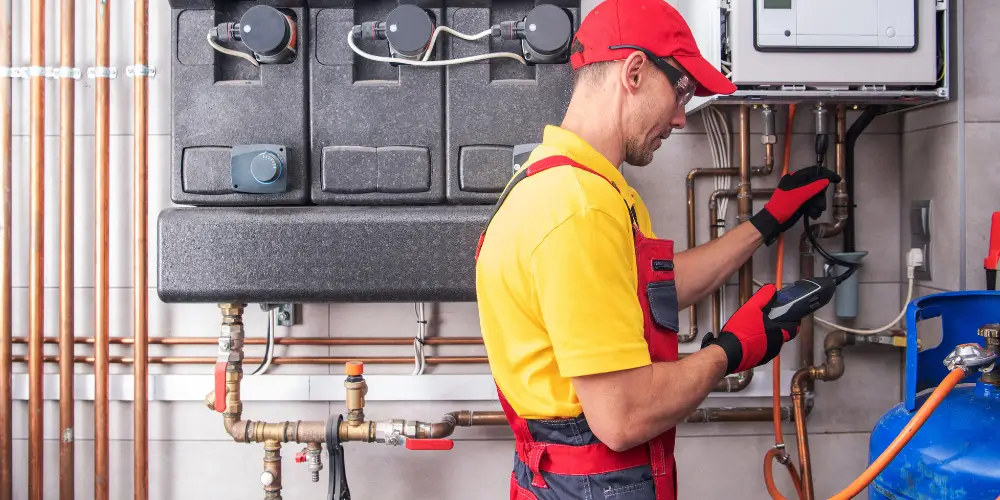
Guarantee that gas appliances, fittings, and flues in a rental property undergo an annual safety check carried out by a Gas Safe-registered engineer, with landlords obtaining and retaining a signed Gas Safety Certificate (CP12) as proof. This requirement guarantees that tenants live without fear of carbon monoxide, leaks, or malfunctions, freeing both parties from avoidable risk. Landlords must provide copies to existing tenants within 28 days of the check and to new tenants before they move in, and keep records for at least 5 years. Timing is strict: annual intervals prevail, and interim checks follow after repairs or new installations. Noncompliance risks prosecution, fines, and loss of the right to lawfully rent.
- Relief knowing inspections are formal and regular.
- Confidence certified engineers verify safety.
- Clarity, clear timelines and record-keeping duty.
- Consequence: tangible penalties enforce standards.
Electrical Safety (EICR), Testing Intervals, and Remedial Actions
Although less visible than gas appliances, the condition of a property’s fixed electrical installations is equally critical, requiring landlords to obtain an Electrical Installation Condition Report (EICR) at specified intervals and to act promptly on any required remedial work. The EICR, produced by a qualified electrician, assesses wiring, consumer units, sockets and protective devices, identifying observations coded as C1 (danger present), C2 (potentially dangerous) or C3 (improvement recommended). Landlords maintain autonomy by commissioning timely testing, typically every five years for most rental properties or at each tenancy change,e where local rules specify shorter periods and by keeping clear records. When remedial actions are flagged, swift, professional correction preserves safety and tenancy continuity; serious faults demand immediate disconnection or urgent repair. Failure to address C1 or C2 items risks enforcement action and liability. Transparent communication and documented compliance protect tenants while enabling landlords to manage properties freely and responsibly within London’s regulatory framework.
Fire Safety For Rentals: Alarms, Escape Routes And Risk Assessments
Every rental property must provide reliable means of fire detection, clear escape routes and a documented fire risk assessment to guarantee tenant safety and regulatory compliance. The landlord guarantees smoke and heat alarms are installed, maintained and tested regularly; shared buildings require interlinked systems and regular checks to protect occupants and preserve freedom of movement. Escape routes must remain unobstructed, well-lit and signed, allowing swift, unimpeded exit. A concise, recorded fire risk assessment identifies hazards, evaluates vulnerable tenants and specifies prevention measures and emergency procedures.
- Fear of confinement is eased when alarms work and exits are clear.
- Confidence grows knowing assessments are current and accessible.
- Peace follows from routine testing and prompt remedial action.
- Autonomy is preserved when safety does not restrict daily life.
Clear responsibilities, timely maintenance and documented records form the backbone of compliant, freedom-respecting fire safety in London rentals.
Carbon Monoxide: Where To Install Monitors And How To Record
Alongside fire precautions, carbon monoxide (CO) monitoring is a separate but equally important health safeguard in London rentals. Landlords should fit audible CO alarms in rooms containing gas, oil or solid-fuel appliances and in any room with an adjoining flue; living rooms and bedrooms are priorities. Alarms must meet British Standards and, where possible, be sited at breathing height, away from cooking appliances and bathrooms to avoid false triggers. Portable or hardwired units are acceptable where they comply with regulations.
Records of installation, model numbers, test dates and battery replacements should be kept digitally or in a dedicated log, accessible to tenants and inspectors. Regular tests on changes of tenancy, and at least annual tests, should be documented with tenant signatures or emailed confirmations. Fault reports must be logged and acted on promptly, with repairs and appliance service records retained. Clear, concise records protect tenants’ freedom to live safely and landlords’ compliance with London safety expectations.
HMO & Selective Licensing In London Boroughs: Complying With Local Rules
When operating rental properties in London, landlords must determine whether a property falls under mandatory HMO licensing or local selective licensing schemes and comply with each borough’s specific conditions, fees, and application processes. The regime requires checking room counts, resident numbers and use; failing to apply risks fines, prohibition notices and loss of letting freedom. Boroughs publish guidance and application portals; timely submission and accurate documentation preserve legal standing and reputation.
- Fear of enforcement drives attention to detail and prompt compliance.
- Relief arises when licences and safety checks are secured, enabling smoother lets.
- Confidence follows clear records, valid licences and adherence to local rules.
Landlords should review borough pages, maintain records, and consult specialists where needed to retain operational liberty while meeting local licensing obligations.
EPCs & MEES For London Rentals: Minimum Standards And Exemptions
Although energy efficiency is often overlooked, landlords in London must meet statutory EPC (Energy Performance Certificate) requirements and Minimum Energy Efficiency Standards (MEES), ensuring privately rented homes generally achieve at least an EPC rating of E before new lets or renewals and addressing higher standards or exemptions where applicable. The regime requires that a valid EPC be provided to prospective tenants and kept on file; remedial work may be required if ratings fall short. MEES restricts letting of properties below band E unless a valid exemption applies, such as listed building constraints, consent denial for improvements, or work deemed not cost-effective under prescribed payback limits. Exemptions must be registered and reviewed periodically. Where improvement is required, landlords retain discretion to choose measures that balance tenant comfort, regulatory compliance, and investment return, including insulation, efficient boilers, or glazing. Enforcement includes fines for non-compliance, though local authorities may prioritise guidance and phased implementation to support timely compliance.

Practical Checklist: Inspections, Essential Records, and Contractors To Hire
A concise practical checklist helps landlords organise required inspections, retain essential records, and select qualified contractors to maintain safety and legal compliance; it should prioritise recurring safety checks (gas, electrical, smoke/CO alarms), documentation (EPCs, gas safety certificates, EICRs, deposit and tenancy records), and a vetted short-list of licensed professionals for repairs and certification. The checklist empowers confident, efficient management while protecting tenants and preserving rental value.
- Annual gas safety check, smoke and CO alarm tests, and periodic EICR freedom to rent without surprise liabilities.
- Maintain digital copies of EPCs, gas safety certificates, EICRs, PAT tests, tenancy agreements, deposit protection proof, and correspondence.
- Keep a vetted contractors list: Gas Safe engineer, NICEIC electrician, accredited asbestos surveyor, and insured general builder for swift, compliant work.
- Schedule reminders, record outcomes, and log invoices to demonstrate due diligence and enable rapid decision-making.
This concise plan reduces risk, saves time, and sustains legal compliance, allowing a landlord to focus on growth and independence.
Frequently Asked Questions
Can Landlords Delegate Safety Duties to Tenants in Writing?
No; they cannot fully delegate legal safety duties to tenants. The landlord retains ultimate responsibility for compliance, though they may request tenant cooperation or assign limited tasks in writing, while still remaining liable for legal obligations.
How Do Short-Term Lets Affect Safety Compliance Obligations?
Short-term lets do not absolve the landlord of safety obligations; they remain responsible for gas, electrical, fire, and furniture safety standards, ensuring compliance and records, though specific duties may be tailored by duration and contract terms.
Are Smart Meters or Third-Party Devices Exempt From CO Rules?
No smart meters and third-party devices are exempt from CO rules; the responsible party must guarantee that any installed equipment doesn’t cause CO risk and complies with safety regulations, maintaining freedom while upholding occupant protection responsibilities.
What Insurance Changes After Documented Safety Breaches?
Insurers typically increase premiums, impose higher excesses, restrict cover, or refuse renewal after documented safety breaches; the landlord may face mandatory remedial conditions and diminished indemnity, prompting the pursuit of alternative insurers or legal remedies to preserve autonomy.
Do Safety Rules Differ for Student Housing Versus Regular Rentals?
Yes. He notes that student housing often demands stricter, tailored fire, gas, and electrical checks, higher occupancy considerations, and institutional policies, while regular rentals follow standard safety regulations; both must meet legal minimums, but enforcement and provisions can differ.
Conclusion
London landlords must meet clear, enforceable safety duties: keep gas and electrical systems inspected and certificated on schedule, fit alarms and carbon monoxide monitors in specified locations, conduct fire risk assessments and maintain safe escape routes, comply with HMO and local licensing, and uphold EPC and MEES standards or valid exemptions. Liability rests with the landlord unless formally delegated in writing. Diligent recordkeeping, timely remedial work, and competent contractors reduce risk, guarantee compliance and protect tenants.